Setting up your first guinea pig cage: the step-by-step checklist
How to set up a safe guinea pig cage in Australia: where to put it, how big it should be, bedding, hides, hay, water and a daily care routine.
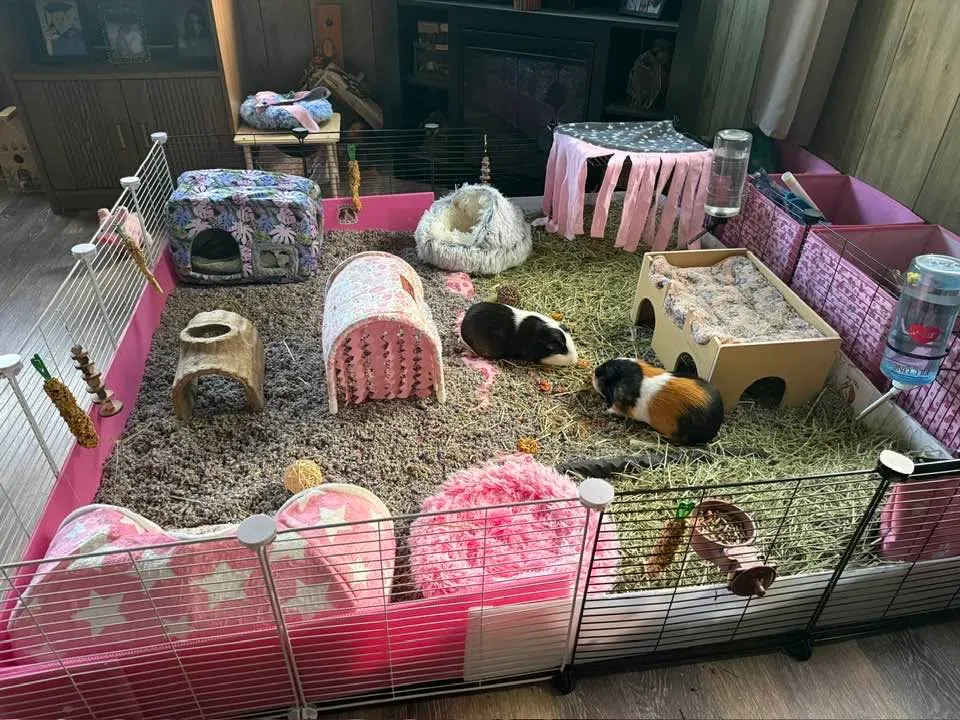
To set up a first guinea pig cage, choose a cool, draught-free spot, then give a pair at least 1 m² of solid floor (RSPCA Australia recommends at least 2 m × 0.5 m). Add dust-free bedding, one more hide than you have guinea pigs, unlimited grass hay, fresh water and a heavy food bowl. Set it all up before your guinea pigs come home.
Setting up the cage before your guinea pigs arrive means their first few days can be calm. A good cage is their whole world, so it needs space to run, places to hide and hay to munch.
Where should you put a guinea pig cage?
Put the cage in a cool, draught-free room where the family spends time, away from direct sun and heat sources. Guinea pigs are social and enjoy being near household activity.
- Pick a cool, draught-free room where people are around during the day.
- Keep it away from direct sun, heaters, air-conditioner vents and loud TVs or speakers.
- If cats or dogs share the room, raise the cage off the floor or add a lid.
RSPCA Australia says guinea pigs are most comfortable between 18°C and 23°C, with humidity below 50%. In most Australian homes, that rules out sunrooms and spots near west-facing windows. RSPCA Australia also notes guinea pigs can live indoors, outdoors or both, and benefit from some direct sunlight a few times a week as long as they can get into shade. Our guide on where to put a guinea pig cage goes into more detail, and indoor vs outdoor guinea pigs covers the choice between the two.
How big should your first guinea pig cage be?
A pair of guinea pigs needs at least 1 m² of flat floor. RSPCA Australia recommends an enclosure of at least 2 m × 0.5 m for a pair, says larger is preferable, and says a rectangular shape is better than a square one.
Other welfare groups set a lower bare minimum. Humane World for Animals gives about 0.7 m² as the minimum for two guinea pigs, with about 1 m² preferred. Aiming for 1 m² or more meets both.
A 2 × 4 grid C&C cage (about 71 × 142 cm) is a common way to reach 1 m² indoors. Use our size calculator for other group sizes, and read our cage size guide for why floor space matters more than height or lofts.
Should you get one guinea pig or two?
Get at least two. Guinea pigs are herd animals, and RSPCA Australia says they should have at least one guinea pig companion.
Don’t house guinea pigs with rabbits as a substitute. Our guide on guinea pigs and rabbits living together explains why. If you’re adding a new guinea pig to one you already have, read introducing guinea pigs first.
What floor and bedding should a guinea pig cage have?
A guinea pig cage needs a solid floor with no wire, covered in absorbent, dust-free bedding. RSPCA Australia advises avoiding wire floors because they can cause injuries and foot infections.
Popular bedding choices are fleece liners over an absorbent layer, or paper-based bedding. Our bedding guide compares the options, including why advice on wood shavings differs between welfare groups.
What essentials go inside the cage?
Every guinea pig cage needs hides, unlimited hay, fresh water, a food bowl and something to explore. This checklist covers the basics for a new setup.
- Hides: at least one more hide than you have guinea pigs, as RSPCA UK recommends, ideally with two exits so no one gets cornered. Boxes, PVC pipes and igloos all work.
- Hay: unlimited fresh grass hay (such as meadow, timothy or oaten) in a rack or a big pile, available at all times. RSPCA Australia calls grass hay the cornerstone of the diet.
- Water: a bottle or heavy bowl per pig, refreshed daily. See water bottle vs bowl.
- Food bowl: heavy ceramic so it can't be tipped over, for pellets and fresh veggies. RSPCA Australia advises avoiding muesli-style mixes.
- Enrichment: tunnels, cardboard boxes and chew-safe wooden toys.
Enrichment matters because, according to RSPCA Australia, guinea pigs in the wild spend about 80% of the day foraging. Our enrichment ideas guide has cheap ways to keep them busy.
How should you arrange the space?
Spread hides out, keep hay close to a hide, and leave a clear run through the middle. A good layout reduces squabbles and makes cleaning easier.
- Put hides at opposite ends so each pig has its own retreat.
- Keep hay near a hide, because guinea pigs like to eat where they feel safe.
- Leave a clear run down the middle for zoomies and popcorning.
- Many owners set up a “kitchen” corner with hay, food and water. Guinea pigs tend to toilet near where they eat, which makes spot-cleaning easier.
What should you do in the first few days?
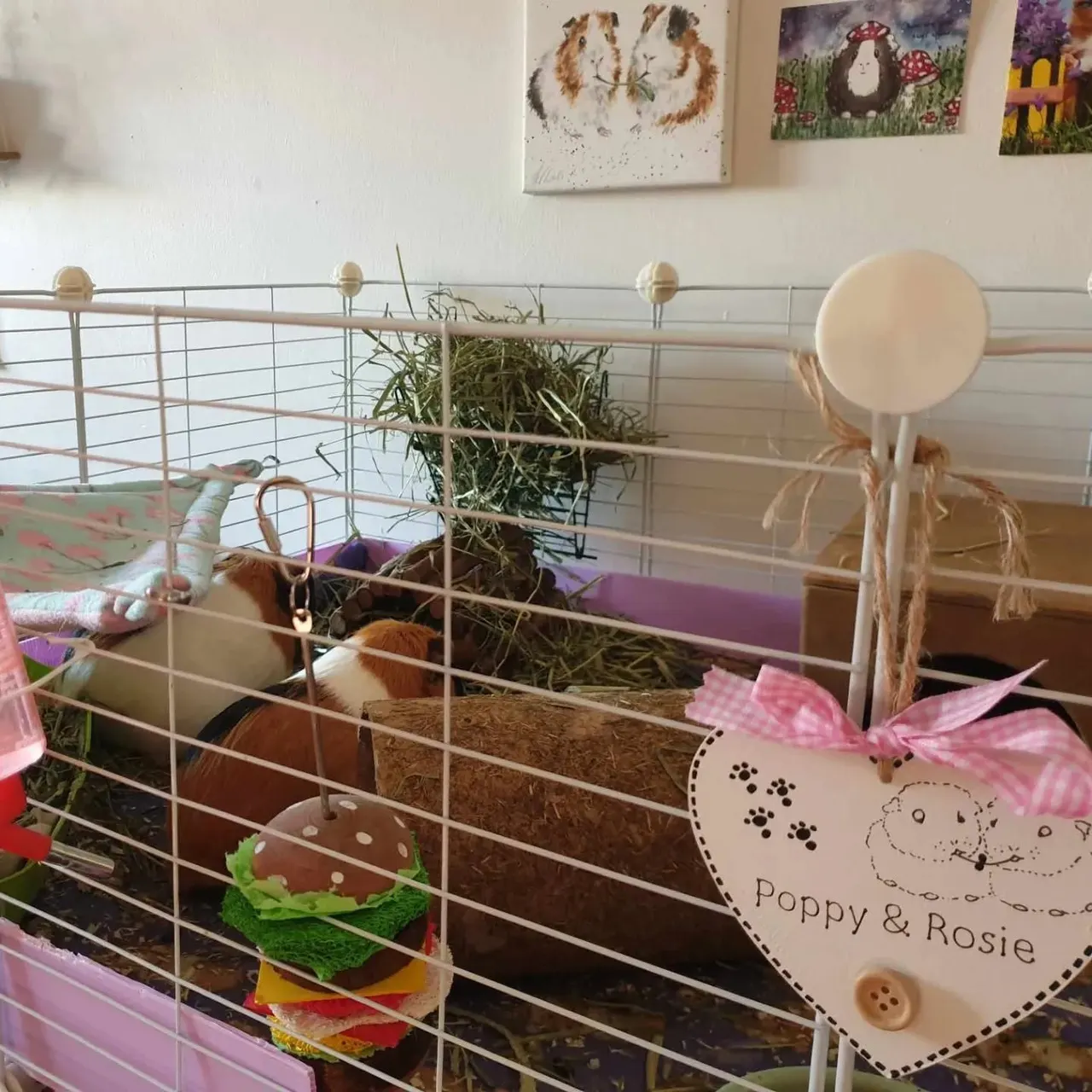
Give new guinea pigs a quiet couple of days to explore before you handle them much. Sit near the cage, talk softly and offer veggies by hand. Expect plenty of hiding at first. That’s completely normal.
RSPCA Australia recommends a vet check soon after you get your guinea pigs, then once a year. It also advises treating new guinea pigs for lice and mites before introducing them to others. Ask your vet what’s safe to use.
What is the daily and weekly care routine?
Guinea pigs need fresh hay, water and veggies every day, plus spot-cleaning. RSPCA Australia recommends cleaning the enclosure at least 2–3 times a week and changing the bedding completely at least once a week.
| When | Task |
|---|---|
| Daily | Refresh hay and water, serve fresh veggies, spot-clean wet patches and droppings, and do a quick health check (eyes, nose, bottom, eating normally) |
| Every 2–3 days | Change fleece liners, or replace soiled bedding in the toilet areas and top it up |
| Weekly | Full clean-out, wash bowls and bottles, and weigh your pigs |
See our cleaning guide for a step-by-step method, and guinea pig cage smell if odour becomes a problem.
Frequently asked questions
What do I need to buy before bringing home guinea pigs?
expand_more
Before your guinea pigs arrive, get a cage with at least 1 m² of solid floor for a pair, dust-free bedding, one more hide than you have guinea pigs, a hay rack or hay pile, a water bottle or heavy bowl per pig, a heavy ceramic food bowl, and a supply of grass hay, pellets and fresh vegetables. Tunnels and cardboard boxes make easy, cheap enrichment.
How big should a cage be for two guinea pigs?
expand_more
RSPCA Australia recommends an enclosure of at least 2 m × 0.5 m for a pair, which is 1 m² of floor, and says larger is preferable. A long rectangular shape is better than a square one. A 2 × 4 grid C&C cage, about 71 × 142 cm, is a common way to reach that size indoors.
Where should I put my guinea pig cage?
expand_more
Put an indoor cage in a cool, draught-free room where the family spends time, away from direct sun, heaters, air-conditioner vents and loud speakers. RSPCA Australia says guinea pigs are most comfortable between 18°C and 23°C, so sunrooms and spots near west-facing windows are usually too hot in an Australian summer.
Should I get one guinea pig or two?
expand_more
Get at least two. RSPCA Australia describes guinea pigs as herd animals that should have at least one guinea pig companion. A single guinea pig can get lonely even with a lot of human attention. Don't house guinea pigs with rabbits instead, as they have different needs.
Can I use a cage with a wire floor?
expand_more
No. RSPCA Australia advises avoiding wire floors because they can injure guinea pigs' feet and lead to foot infections. Choose a cage with a solid base and cover it with dust-free bedding such as paper-based bedding, or fleece liners over an absorbent layer.
Do new guinea pigs need a vet check?
expand_more
Yes. RSPCA Australia recommends a vet check soon after you get your guinea pigs, then once a year. It also advises treating new guinea pigs for lice and mites before introducing them to guinea pigs you already have. Your vet can recommend a safe treatment.
Want a properly sized cage without the DIY?
We're looking at bringing properly sized cages and C&C kits to Australia. Join the waitlist and tell us what you'd want.
This guide is general information to help you compare housing options. It isn't veterinary advice. If your guinea pig seems unwell, contact a vet experienced with exotic pets.


