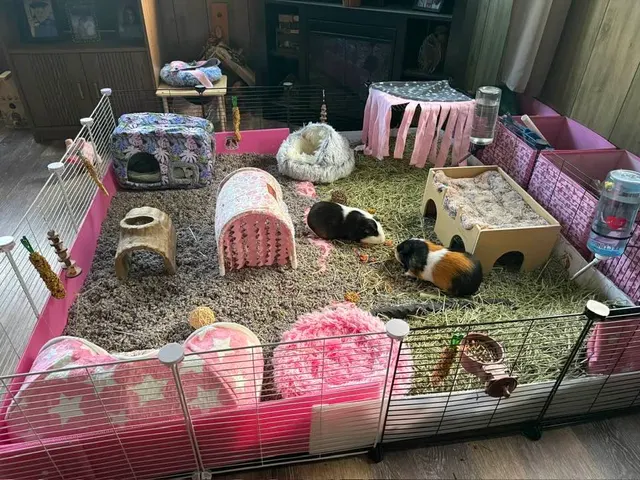
Water bottle or water bowl for guinea pigs?
Should guinea pigs drink from a bottle or a bowl? The pros and cons of each, how much water guinea pigs drink, how to check a bottle is working, and how to stop leaks.

Both bottles and bowls are fine for guinea pigs. Bottles stay cleaner and don't tip over, but they can block or leak. Bowls never block and let pigs drink naturally, but need cleaning every day. The safest setup is one of each, and at least one water source per two pigs in larger groups.
Water sounds simple, but it’s one of the most common setup questions. And a blocked bottle nobody noticed is a real risk in an Australian summer. Here’s how to choose.
Water bottle vs bowl: pros and cons
| Water bottle | Water bowl | |
|---|---|---|
| Stays clean | Yes, water sealed off from hay and poop | No, gets hay, bedding and droppings in it |
| Tipping and spills | Doesn’t tip (but can leak) | Light bowls tip; use a heavy ceramic one |
| Blocking risk | Can block or airlock | Never blocks |
| Drinking position | Head tipped up | Head down, more natural |
| How fast pigs drink | Slower | Faster, useful in heat |
| Daily cleaning | Refill daily, wash weekly | Wash and refill daily |
| Freezing in winter | Spout can freeze outdoors | Freezes more slowly |
Why offering both is safest
A guinea pig can become unwell quickly without water, especially on hot days. With a bottle and a bowl:
- If the bottle blocks or empties, there’s a backup.
- If the bowl gets tipped or fouled, there’s a backup.
- A bossy pig can’t guard the only water source.
In groups of three or more, provide at least one water source for every two pigs, spread out across the cage.
How to choose a good water bottle
- Metal spout with a ball-bearing, preferably double-ball, which leaks less
- Chew-proof: glass, or plastic with a metal guard where pigs can reach it
- Big enough: at least 500 ml for a pair, so it won't run dry before you're back
- Wide opening so you can scrub it with a bottle brush
- Secure fitting: a sturdy wire holder or clip, not a flimsy spring
Hang the bottle so the spout is at the height of your smallest pig’s mouth when it’s standing normally, not stretching up.
How to check a water bottle is working
Do this every day when you refill it:
- Tap the ball in the spout with your finger. A few drops should come out.
- Check the level. It should go down a little each day. If it’s always full, your pigs may not be able to get water out.
- Look for leaks. A wet patch under the bottle often means a worn washer or a loose lid.
How to stop a water bottle leaking
- Tighten the lid and replace a worn rubber washer.
- Hang the bottle with the spout pointing down at a gentle angle.
- Fill it right to the top. A half-empty bottle warming up in the sun can push water out.
- Replace cheap single-ball spouts with a double-ball spout.
Choosing a water bowl
Use a heavy ceramic bowl that guinea pigs can’t tip or push around. Put it in a spot away from the hay pile and the toilet corners, or raise it slightly on a tile, so less bedding gets kicked in. Rinse and refill it every day, or twice a day in hot weather.
Water in summer and winter
- Summer: check water twice a day. Put bottles and bowls in the shade, because water in the sun gets warm and grows algae. A frozen water bottle wrapped in a towel is a good way to cool the cage, but it isn’t a drinking source. See the summer heat guide.
- Winter: outdoor bottles can freeze overnight, often in the spout first. Check first thing in the morning, and use an insulated bottle cover or a bowl as backup. See the winter guide.
Keeping water clean
- Every day: empty and refill with fresh tap water. Don’t top up old water.
- Every week: scrub bottles and spouts with hot water and a bottle brush. A small pipe cleaner reaches inside the spout.
- Avoid: adding vitamin drops to water. Guinea pigs may drink less if it tastes different, and vitamin C breaks down quickly in water. Give vitamin C through fresh vegetables and guinea pig pellets instead.
For everything else that goes into a new cage, see our first cage setup checklist.
Frequently asked questions
Is a water bottle or bowl better for guinea pigs?
expand_more
Both work, and many owners offer both. Bottles stay clean and don't tip, but they can leak or block. Bowls let guinea pigs drink in a more natural position and never block, but they get hay and droppings in them and need refreshing more often. Offering one of each is the safest option, especially in summer.
How much water does a guinea pig drink a day?
expand_more
It varies with diet, temperature and size, but an adult guinea pig commonly drinks roughly 50 to 150 ml a day, and more in hot weather. Pigs that eat lots of watery vegetables may drink less. A sudden big change in how much your guinea pig drinks is worth a vet check.
How do I know if my guinea pig's water bottle is working?
expand_more
Tap or press the ball in the spout with your finger. A few drops should come out. If nothing comes out, the spout is blocked or there's an airlock. Also check the water level drops a little each day and look for leaks.
Why is my guinea pig's water bottle leaking?
expand_more
Common causes are a loose lid, a worn washer, a bottle hanging at an angle, or a big temperature change that pushes water out. Replace worn washers, tighten the lid and hang the bottle so the spout points down at a gentle angle.
How often should I clean a guinea pig water bottle?
expand_more
Refill with fresh water every day. Wash the bottle and spout at least weekly with hot water and a bottle brush to remove slime and algae. Clean bowls every day, because they collect hay, bedding and droppings.
Can guinea pigs learn to drink from a water bottle?
expand_more
Most learn quickly by watching cage mates. If you've just brought a guinea pig home, offer a bowl as well until you've seen it drinking from the bottle. You can tap the spout to release a drop so they notice where the water comes from.
Want a properly sized cage without the DIY?
We're looking at bringing properly sized cages and C&C kits to Australia. Join the waitlist and tell us what you'd want.
This guide is general information to help you compare housing options. It isn't veterinary advice. If your guinea pig seems unwell, contact a vet experienced with exotic pets.