Keeping guinea pigs warm in an Australian winter
How cold is too cold for guinea pigs? Safe temperatures, signs your pigs are cold, and practical ways to keep indoor and outdoor guinea pigs warm through an Australian winter.

Guinea pigs are comfortable between 18°C and 23°C, according to RSPCA Australia. In winter, give them a deep bed of hay, snug hides, and shelter from wind and rain. Bring outdoor guinea pigs inside on cold, wet or frosty nights. Avoid sudden big temperature changes, and never use a heater close to the cage.
Most Australian guinea pig advice is about heat, and rightly so. But winter nights in Canberra, the Blue Mountains, inland Victoria, Tasmania and much of southern Australia regularly drop to single figures or below freezing. Pet guinea pigs can’t move somewhere warmer on their own, so they rely on you to keep them warm.
How cold is too cold for guinea pigs?
Guinea pigs do best between 18°C and 23°C. They cope with cool temperatures much better than with heat, but they struggle with:
- Cold combined with wind or damp. Wet fur and draughts pull heat away quickly.
- Frost and near-freezing nights, especially for outdoor pigs.
- Sudden temperature swings, such as coming from a heated room into a freezing yard.
A sensible rule for outdoor pigs: if the overnight forecast is in the low single figures, frosty, or wet and windy, bring them inside for the night.
Young, elderly, sick, underweight and short-haired or hairless (skinny pig) guinea pigs feel the cold more and should come in sooner.
Signs your guinea pig is too cold
- Sitting hunched, with fur fluffed up
- Huddling tightly with cage mates and not moving about
- Eating or drinking less than usual
- Ears and feet feel cold to touch
- Shivering, or seeming slow and sleepy
If a guinea pig is limp, very cold or won’t eat, warm them gently by wrapping them in a towel and holding them against you in a warm room, then call a vet. Guinea pigs that stop eating for even a day can become seriously ill.
Keeping outdoor guinea pigs warm
Make the hutch weatherproof
- Raise it off the ground on legs or bricks so cold and damp don’t soak up through the floor.
- Face the open side away from prevailing winds and rain. In most of southern Australia, that means away from the south and west.
- Cover it at night. Use a fitted hutch cover or a tarp over the top and sides. Leave a gap for airflow so moisture and ammonia can escape.
- Check for leaks in the roof and gaps in the walls before winter starts.
For more on choosing and positioning a hutch, see our outdoor hutches and runs guide.
Pack the bedroom with hay
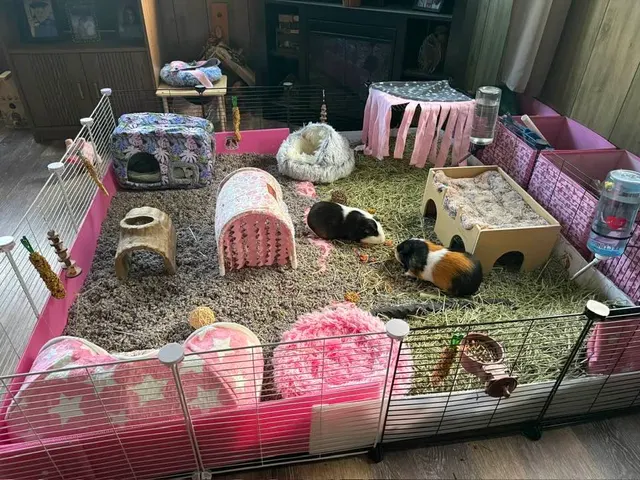
A deep layer of fresh, dry hay is the best insulation you can give. Pack the sleeping area so your pigs can burrow into it. Replace damp hay straight away, because wet bedding draws heat away from your pigs instead of keeping it in.
Give them snug hides
Add a hide per pig: wooden houses, fleece cosies or cardboard boxes stuffed with hay. Hides with a small entrance hold warmth better than open tunnels.
Check the water
Water bottles can freeze overnight in frosty areas, and the metal spout can freeze first. Check first thing in the morning, and use a bottle cover or offer a heavy bowl as a backup. See water bottle vs bowl.
Bring them in when it’s cold
Outdoor guinea pigs don’t have to stay outside every night. On the coldest nights, bring them into a garage, laundry or spare room in a carrier or temporary pen with hay and water. Avoid a garage that has car exhaust fumes or is almost as cold as outside.
Keeping indoor guinea pigs warm
Indoor guinea pigs in a lived-in room are usually warm enough. Still:
- Keep the cage away from external doors and windows, where cold draughts come in. Read where to put a guinea pig cage.
- Raise the cage off a cold tile or concrete floor, or put a rug or foam mat under it.
- Add extra hay and fleece cosies for sleeping.
- Keep the cage well back from heaters, fireplaces and reverse-cycle air-con vents. Guinea pigs can overheat fast and can’t move away.
Are heat pads and heaters safe?
Can be OK
- Microwavable heat pads made for small pets, inside a fleece cover
- Pet-safe, low-wattage heat mats with chew-proof cords, under part of the floor only
- Warming the whole room gently and steadily
Avoid
- Human electric blankets and hot water bottles
- Heat lamps or fan heaters pointed at the cage
- Any exposed cords your pigs can chew
- Heating the whole floor so they can't move somewhere cooler
Always leave part of the cage unheated so your guinea pigs can move away if they get too warm.
Moving outdoor pigs inside for winter
If you bring outdoor guinea pigs in for the whole winter, don’t move them straight back out on the first warm day. Guinea pigs cope badly with big temperature swings. Wait until nights are reliably mild in spring, and consider putting them out during the day first.
Winter is also a good time to plan for summer. Our summer heat guide covers the other end of the year, and indoor vs outdoor guinea pigs weighs up both options.
Frequently asked questions
How cold is too cold for guinea pigs?
expand_more
RSPCA Australia says guinea pigs are comfortable only between 18°C and 23°C. They cope with cold better than heat, but once temperatures drop into the low teens they need extra bedding and shelter. On cold nights, especially frosty ones, it's safest to bring outdoor guinea pigs inside.
Can guinea pigs live outside in winter in Australia?
expand_more
In mild coastal areas, healthy adult guinea pigs can stay outdoors in winter if the hutch is weatherproof, raised off the ground, sheltered from wind and rain, and packed with hay. In cold inland, alpine and southern areas where nights drop near or below freezing, they should come inside for winter.
How do I know if my guinea pig is cold?
expand_more
A cold guinea pig may sit hunched with its fur fluffed up, huddle with its cage mates, move and eat less, or feel cool to touch on its ears and feet. A guinea pig that is very cold, limp or not eating needs to be warmed gently and seen by a vet.
Are heat pads safe for guinea pigs?
expand_more
Only products made for small pets, such as microwavable heat pads or pet-safe low-wattage heat mats, used under a cover and in one part of the cage so your pigs can move away. Never use a human electric blanket or hot water bottle, and keep all cords out of chewing reach.
Should I cover my guinea pig hutch at night in winter?
expand_more
Yes. A fitted hutch cover or a tarp over the hutch at night blocks wind and rain and keeps warmth in. Leave a gap for airflow so ammonia and moisture can escape, and roll it up again in the morning.
Do guinea pigs need a heater indoors?
expand_more
Usually not. Indoor guinea pigs in a lived-in room are normally warm enough with a deep bed of hay and snug hides. If you do heat the room, keep the cage well away from the heater, and avoid big swings between a hot day-time room and a cold night.
Want a properly sized cage without the DIY?
We're looking at bringing properly sized cages and C&C kits to Australia. Join the waitlist and tell us what you'd want.
This guide is general information to help you compare housing options. It isn't veterinary advice. If your guinea pig seems unwell, contact a vet experienced with exotic pets.