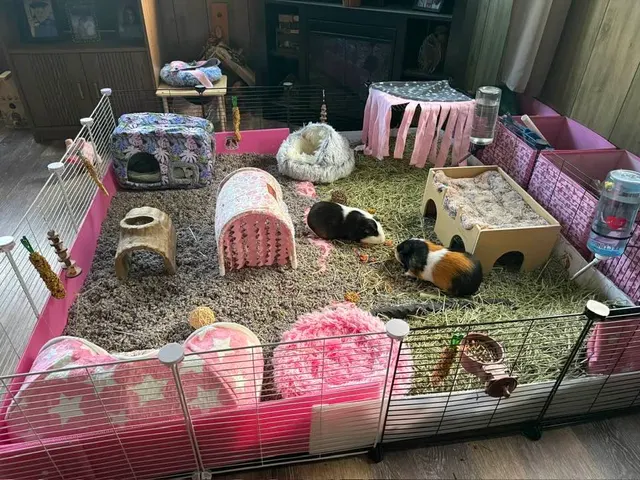
The best bedding for guinea pigs in Australia
Fleece, paper bedding, hay and wood shavings compared. Which guinea pig bedding is safest, most absorbent and easiest to care for in Australia.

The safest guinea pig bedding in Australia is dust-free paper bedding or fleece liners over an absorbent layer. RSPCA Australia recommends dust-free bedding such as paper, paper kitty litter or hay, and says to avoid wood shavings. Never use pine or cedar shavings. Paper bedding works best about 5–8 cm deep.
Good bedding keeps guinea pigs dry and comfortable, and helps prevent sore feet and breathing problems. The right choice depends on your budget and how much washing you’re happy to do.
What bedding is best for guinea pigs?
Dust-free paper bedding and fleece liners are the best everyday choices for guinea pigs. RSPCA Australia recommends a solid floor covered with dust-free bedding such as paper, paper kitty litter, artificial turf or plant material like hay, and says washable fabric mats are fine too.
This table compares common guinea pig bedding types on absorbency, dust, cost and cleaning.
| Bedding | Absorbency | Dust | Ongoing cost | Cleaning |
|---|---|---|---|---|
| Fleece liners (with an absorbent layer) | Good | Very low | Low once bought | Sweep daily, wash every 2–3 days |
| Paper-based bedding | Very good | Low | Medium to high | Replace soiled areas daily |
| Paper cat litter pellets (in toilet corners) | Excellent | Low | Low | Scoop daily |
| Aspen or other hardwood shavings (dust-extracted) | Good | Medium | Low | Mixed advice, see the wood shavings section |
| Pine or cedar shavings | Good | Medium to high | Low | Not recommended |
Are wood shavings safe for guinea pigs?
Welfare groups disagree on wood shavings, but none of them recommend pine or cedar. The safest choice in Australia is to skip shavings and use paper or fleece.
- RSPCA Australia says to avoid wood shavings altogether, because they can stick to a guinea pig’s bottom and cause irritation or blockages.
- RSPCA UK says dry, dust-free, absorbent wood shavings are fine, but to avoid pine and other softwoods.
- PDSA, a UK vet charity, lists clean, dust-free wood shavings as a suitable bedding.
- Humane World for Animals advises against cedar and pine shavings because they are respiratory irritants.
If you already use a dust-extracted hardwood shaving such as aspen, the UK groups would consider it acceptable. If you’re choosing bedding fresh, paper or fleece is the option every group is comfortable with.
Humane World for Animals advises against cedar and pine shavings because they can irritate guinea pigs' breathing, and RSPCA UK says to avoid pine and softwood bedding. Paper bedding or fleece is a safer choice. Also avoid sawdust, cotton wool, thin-strand nesting material, coarse straw and scented bedding.
Are fleece liners good for guinea pigs?
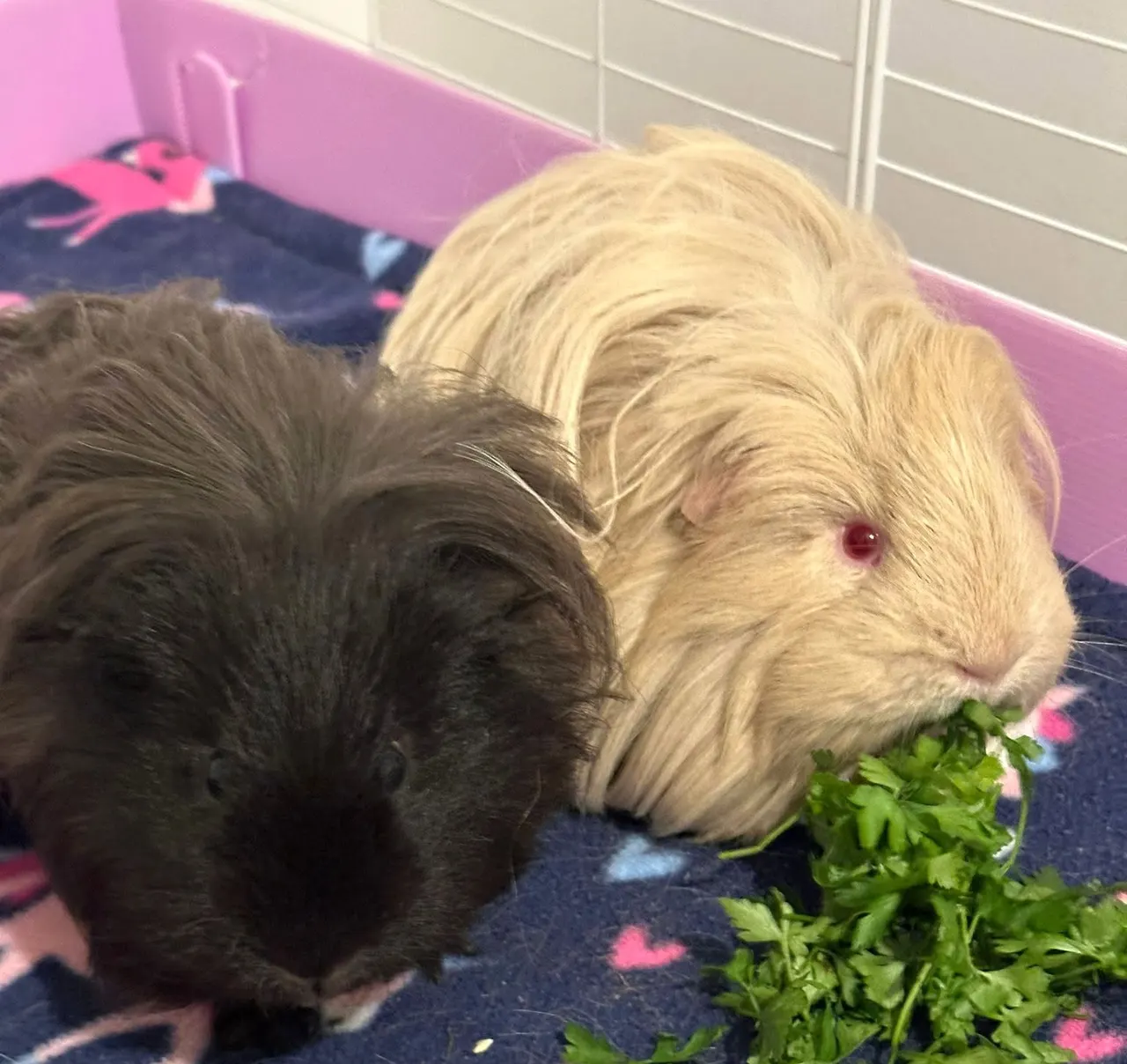
Fleece liners are a good, low-dust bedding for guinea pigs, as long as there is an absorbent layer underneath and you wash them often. Many Australian owners with C&C cages use them. Urine soaks through the fleece into the absorbent layer (such as old towels or a purpose-made liner), so the top stays dry.
Fleece pros
- Very little dust.
- Looks tidy.
- Cheaper over time.
Fleece cons
- Needs daily sweeping of droppings and hay.
- Needs washing every 2–3 days.
- New fleece must be washed a few times before liquid soaks through properly.
Is paper bedding good for guinea pigs?
Paper-based bedding is one of the best choices for guinea pigs, especially for beginners. It’s soft, absorbent and low in dust, and guinea pigs love burrowing in it. Humane World for Animals recommends paper-based bedding about 5–8 cm deep.
Paper bedding pros
- Very absorbent and forgiving.
- Great for burrowing.
- Low dust.
Paper bedding cons
- An ongoing cost.
- Can get kicked out of low-sided cages.
Can you mix fleece and paper bedding?
Yes, and many owners do. Use fleece across most of the cage, with a “kitchen” corner of paper bedding or paper litter under the hay rack, where most toileting happens. You get the tidiness of fleece with the easy scooping of loose bedding.
Can hay be used as guinea pig bedding?
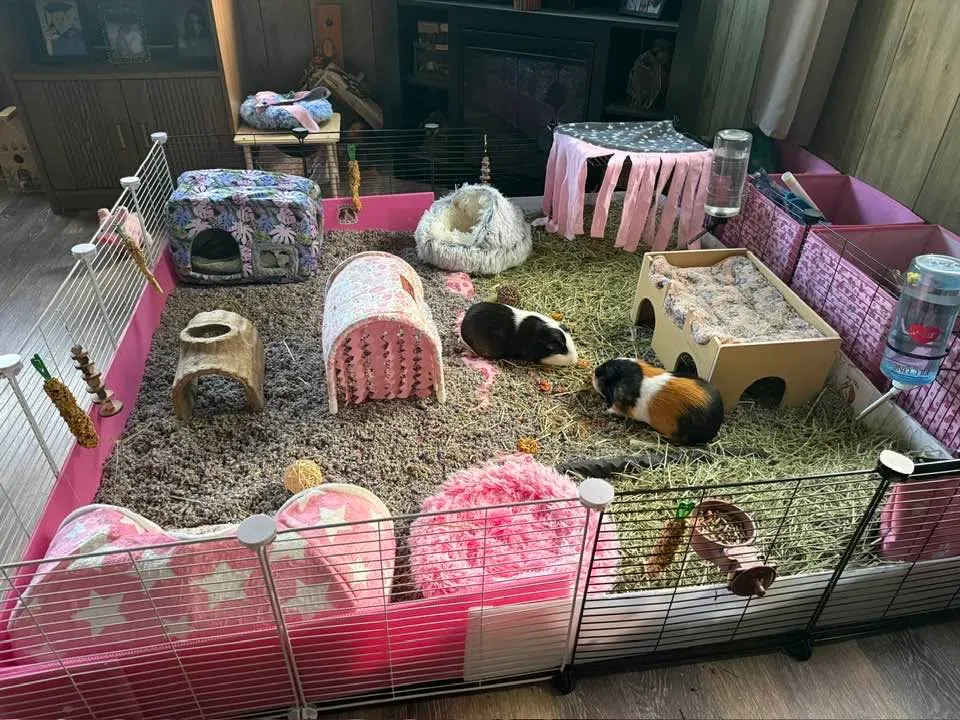
Hay makes cosy bedding, but it isn’t absorbent enough to be the only layer. A generous pile of grass hay on top of paper or fleece gives guinea pigs somewhere to burrow and graze at the same time. Replace it daily, because wet hay goes mouldy quickly in humid weather. In very cold weather, PDSA suggests adding extra bedding. Our winter guide has more on that.
How often should you change guinea pig bedding?
RSPCA Australia recommends changing guinea pig bedding completely at least once a week, and spot-cleaning soiled areas in between. Fleece liners usually need swapping every 2–3 days. Our guide on how to clean a guinea pig cage has a full routine, and guinea pig cage smell helps if odour is a problem.
Frequently asked questions
Are wood shavings safe for guinea pigs?
expand_more
Advice differs. RSPCA Australia says to avoid wood shavings. RSPCA UK accepts dry, dust-free shavings but says to avoid pine and other softwoods, PDSA lists clean, dust-free shavings as suitable, and Humane World for Animals warns against pine and cedar as respiratory irritants. Paper-based bedding or fleece avoids the question entirely, so it is the safer choice in Australia.
Is pine bedding safe for guinea pigs?
expand_more
No. Humane World for Animals advises against pine and cedar shavings because they can irritate guinea pigs' breathing, and RSPCA UK says to avoid pine and other softwood bedding. RSPCA Australia goes further and recommends avoiding wood shavings altogether. Choose dust-free paper bedding or fleece liners instead.
Is fleece or paper bedding better for guinea pigs?
expand_more
Both are good, dust-free choices. Fleece liners over an absorbent layer cost less over time and look tidy, but need daily sweeping and washing every 2–3 days. Paper bedding is more absorbent and forgiving and great for burrowing, but is an ongoing cost. Many owners combine fleece across the cage with a paper corner under the hay.
How deep should guinea pig bedding be?
expand_more
Humane World for Animals recommends paper-based bedding about 5–8 cm deep. That is deep enough to absorb urine and let guinea pigs burrow. With fleece, depth comes from the absorbent layer underneath, such as old towels or a purpose-made liner, rather than from the fleece itself.
What bedding does RSPCA Australia recommend for guinea pigs?
expand_more
RSPCA Australia recommends a solid floor covered with dust-free bedding such as paper, paper kitty litter, artificial turf, or plant material such as hay. It says washable fabric mats are also fine, and it advises avoiding wood shavings and wire floors.
Can guinea pigs use hay as their only bedding?
expand_more
Hay makes cosy bedding and guinea pigs love it, but it is not absorbent enough to be the only layer. Use it on top of paper bedding or fleece, and replace it daily, because wet hay can go mouldy quickly in humid Australian weather.
Want a properly sized cage without the DIY?
We're looking at bringing properly sized cages and C&C kits to Australia. Join the waitlist and tell us what you'd want.
This guide is general information to help you compare housing options. It isn't veterinary advice. If your guinea pig seems unwell, contact a vet experienced with exotic pets.