C&C guinea pig cages: a guide for Australian owners
What a C&C (cubes and Corflute) guinea pig cage is, what size to build, what it costs in Australia and where to buy grids and Corflute.
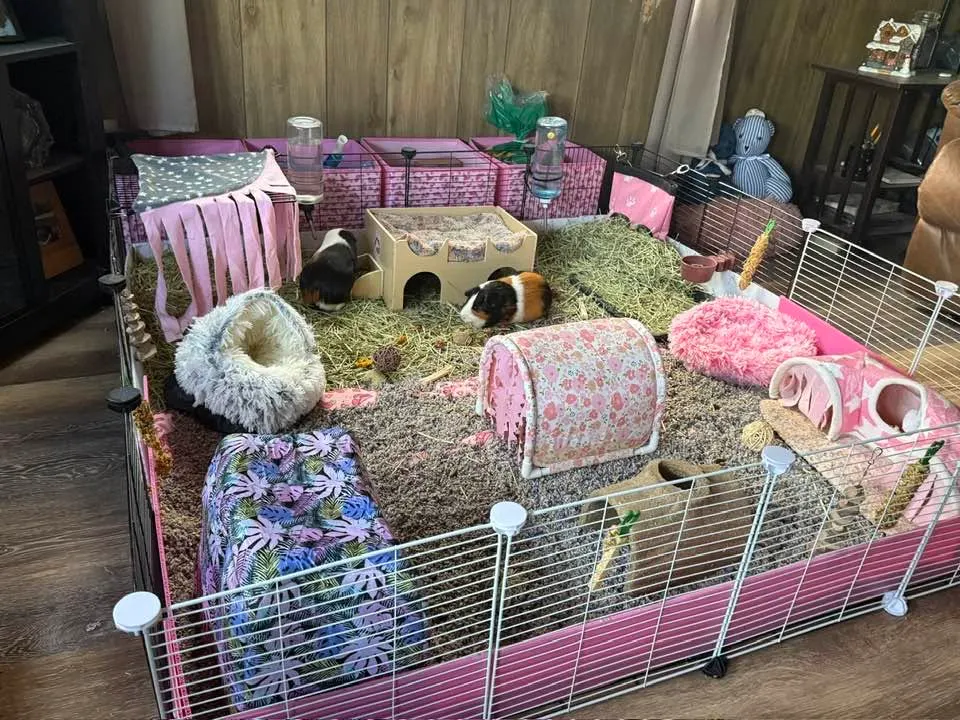
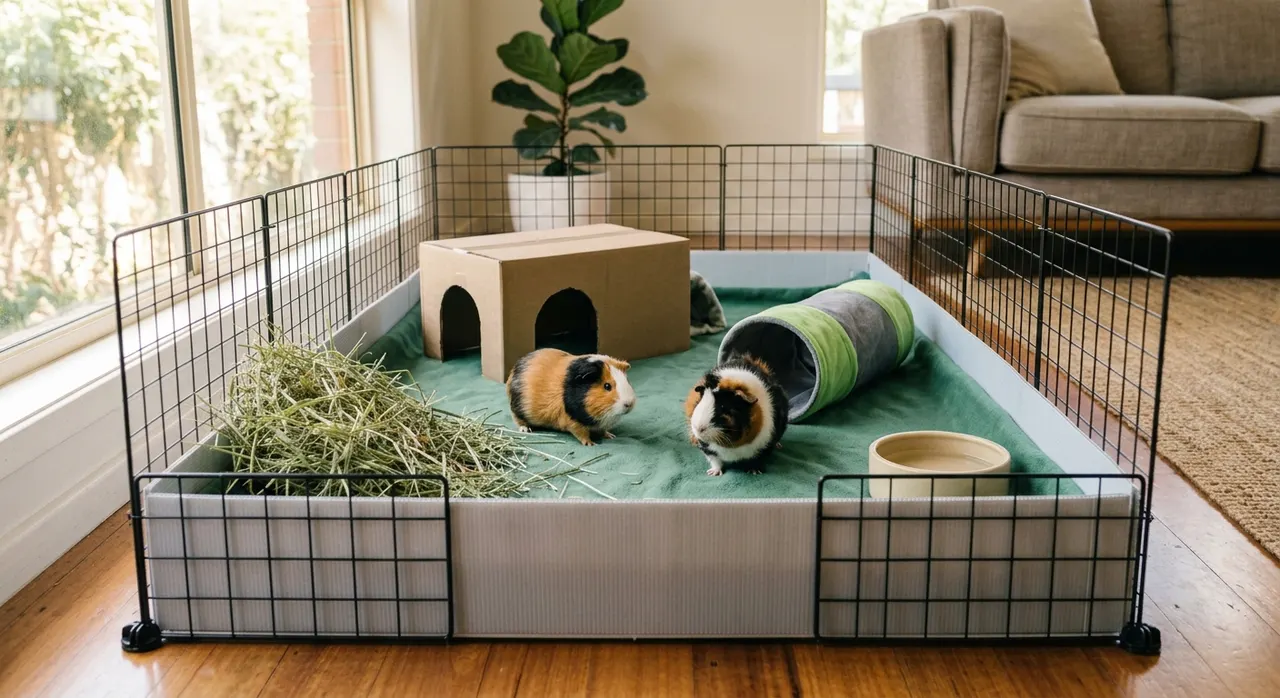
A C&C cage is built from wire storage grids (cubes) and a folded Corflute base. For a pair of guinea pigs, build a 2 × 4 grid layout, about 71 × 142 cm or 1 m², the same floor area as RSPCA Australia's guidance of at least 2 m × 0.5 m for a pair. Materials usually cost around $100 to $120, often less than a much smaller pet-shop cage.
A C&C cage gives guinea pigs a lot of floor space for not much money. This guide covers sizes, costs, where to buy materials in Australia and how it goes together.
What is a C&C guinea pig cage?
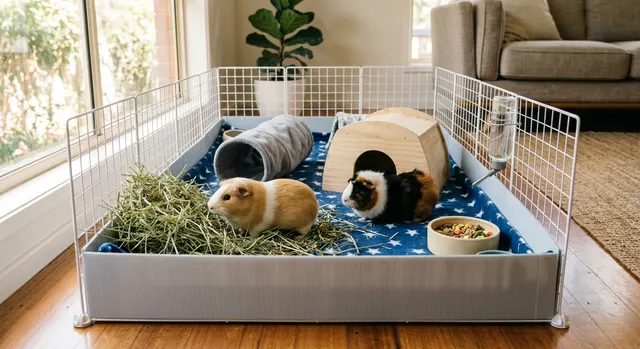
A C&C cage is a guinea pig enclosure made from Cubes (wire storage grids) and Corflute (corrugated plastic sheet, called coroplast overseas). The grids form the walls, and a sheet of Corflute is folded into a waterproof tray for the floor. The result is a roomy, modular cage. Humane World for Animals notes that many rescue organisations recommend C&C cages.
Why are C&C cages so popular?
C&C cages are popular because they give a lot of solid floor space for a low price, and they can be expanded as a herd grows. The main trade-offs are the floor space they take up and a little DIY.
The advantages
- Lots of floor space for the money. A 2 × 4 cage gives about 1 m², in line with RSPCA Australia's guidance for a pair.
- Modular, so you can add grids as your herd grows or change the shape to fit a room.
- Solid floor with no wire underfoot, so feet and legs can't get caught.
- Open sides give good airflow and make it easy to interact with your pigs.
- Easy to clean, with either fleece liners or loose bedding.
Things to consider
- Takes up real floor space, so measure your room first.
- No lid unless you add one. Use extra grids as a lid if you have cats or dogs.
- Some DIY is involved, such as cutting and folding the Corflute and fitting the connectors.
- Loose bedding can get kicked out, so a taller wall around the hay area helps.
How much does a C&C cage cost in Australia?
A C&C cage usually costs around $100 to $120 in materials: one pack of storage grids and one Corflute sheet. That buys about 1 m² of floor, roughly twice the floor space of many pet-shop cages that cost more. See how a C&C cage compares with other budget options in our guide to cheap guinea pig cages.
What size C&C cage should I build?
For two guinea pigs, build a 2 × 4 grid C&C cage, which gives about 1 m² of floor. Standard C&C grids are 35.5 cm (14 inches) square, and Australian sellers often list them as 35 × 35 cm. Layouts are described in grids, width × length:
| Layout | Approx. floor | Floor area | Suits |
|---|---|---|---|
| 2 × 3 | 71 × 107 cm | 0.76 m² | 1–2 pigs (bare minimum) |
| 2 × 4 | 71 × 142 cm | 1.0 m² | 2 pigs (recommended) |
| 2 × 5 | 71 × 178 cm | 1.26 m² | 3 pigs, or 2 boars |
| 2 × 6 | 71 × 213 cm | 1.51 m² | 4 pigs |
| 3 × 5 | 107 × 178 cm | 1.89 m² | 5–6 pigs |
A 2 × 4 layout is a better choice for a pair than a 2 × 3. It gives about 1 m², in line with RSPCA Australia’s guidance of at least 2 m × 0.5 m for a pair, with larger preferable. RSPCA Australia also says rectangular enclosures are better than square ones, which suits a long C&C layout. Humane World for Animals gives a preferred size of about 1.0 m² for two pigs and about 1.2 m² for three.
Two grids wide (about 71 cm) is easy to reach across when cleaning. If you go three wide, put the cage where you can reach in from both long sides.
Where to buy grids and Corflute in Australia
Grids come from homewares stores and online marketplaces, and Corflute sheets come from Bunnings.
- Grids: wire storage cube packs are sold at homewares stores and on online marketplaces, and usually come with connectors.
- Corflute: Bunnings sells plain Corflute sheets, including 2440 × 1220 mm sheets that are big enough to fold into a 2 × 4 base with raised sides. Some sizes and colours are special order only, so check stock at your local store.
Some budget storage cubes use smaller panels or wider gaps between the wires. Young or small guinea pigs can squeeze through these or get their heads stuck. Check the panel size and the gap between wires before you buy. If the gaps are wide, run a strip of Corflute or a second layer of grids along the bottom.
How do you put a C&C cage together?
A C&C cage goes together in five steps: plan the layout, join the grids into walls, fold a Corflute tray, add a lid if needed, then furnish it.
- Plan the layout. Decide how many grids wide and long, and check it fits your space with a gap from walls and heaters.
- Build the walls. Join the grids with the connectors or cable ties to form a rectangle.
- Make the base. Cut the Corflute about 15 cm larger than the floor on every side, score the fold lines, fold the sides up and tape the corners. The tray sits inside the grid walls.
- Add a lid if needed. Lay extra grids across the top if pets or young kids are around. RSPCA Australia says a roof may be needed wherever guinea pigs are at risk from dogs, cats or birds of prey.
- Furnish it. Add bedding or fleece, a hide for each pig, a hay rack, water bottles or bowls, and a food bowl.
Want step-by-step instructions with measurements? Read our DIY guinea pig cage guide.
Rather skip the DIY?
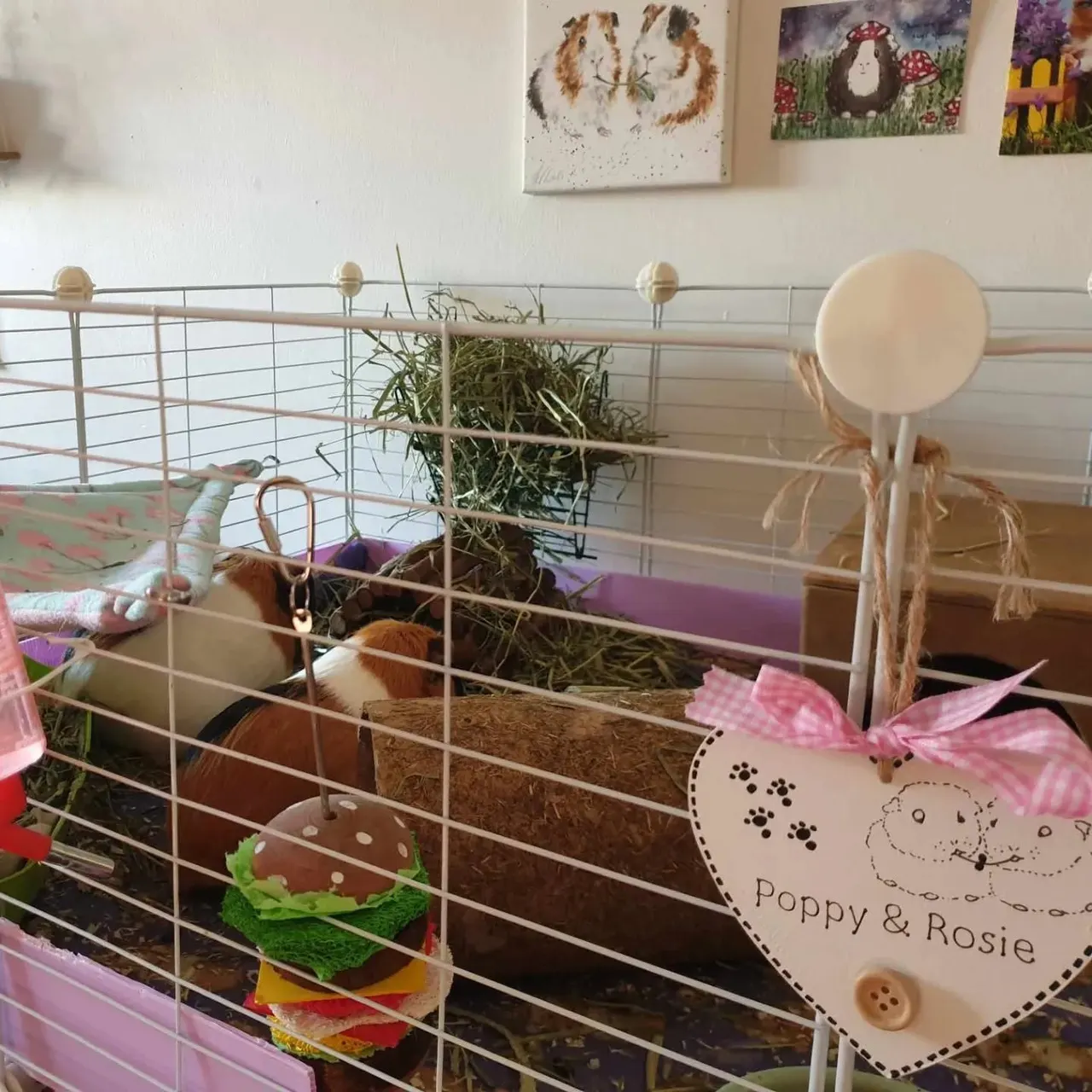
If you don’t want to build a C&C cage yourself, you can buy a ready-made cage instead. We’re working on ready-to-assemble, properly sized C&C kits for Australia, with a pre-cut base and fleece liner. Join the waitlist to hear when they’re available. Until then, see our researched picks for cages you can buy today.
Where should a C&C cage go in an Australian home?
Put a C&C cage in the coolest, draught-free room in the house, away from windows that get afternoon sun. RSPCA Australia notes guinea pigs are comfortable between about 18°C and 23°C, and heat stress can occur from 24°C. See our summer heat guide and where to put a guinea pig cage.
Frequently asked questions
What size C&C cage do 2 guinea pigs need?
expand_more
A pair needs a 2 × 4 grid C&C cage, about 71 × 142 cm or 1 m² of floor. That's the same floor area as RSPCA Australia's guidance of at least 2 m × 0.5 m (1 m²) for a pair. A 2 × 3 layout of about 0.76 m² is only a bare minimum. Two boars often do better in a 2 × 5 of about 1.26 m².
How much does a C&C cage cost in Australia?
expand_more
A pack of wire storage grids and one Corflute sheet usually costs around $100 to $120 in total. That builds a 2 × 4 grid cage with about 1 m² of floor, roughly twice the floor space of many pet-shop cages that cost more. Second-hand grids can bring the cost down further.
Where can I buy C&C grids and Corflute in Australia?
expand_more
Wire storage cube packs are sold at homewares stores and on online marketplaces, and usually include connectors. Bunnings sells plain Corflute sheets, including 2440 × 1220 mm sheets that are big enough for a 2 × 4 base with raised sides. Some Corflute sizes and colours are special order, so check stock at your local store.
Are C&C cages safe for guinea pigs?
expand_more
Yes, if the grids have small gaps. The Corflute base gives a solid floor, which avoids the foot injuries wire floors can cause. Check that the panels are about 35 cm square with narrow gaps between the wires, because young or small guinea pigs can squeeze through or get their heads stuck in wider gaps.
Do C&C cages need a lid if I have cats or dogs?
expand_more
Yes. A C&C cage has open tops, so if cats, dogs or curious young children can reach it, lay extra grids across the top as a lid. RSPCA Australia says a roof may be needed wherever guinea pigs are at risk from dogs, cats or birds of prey.
What does C&C stand for in guinea pig cages?
expand_more
C&C stands for cubes and coroplast. The cubes are wire storage grids that form the walls, and coroplast is corrugated plastic sheet, sold in Australia as Corflute, which is folded into a waterproof tray for the floor. Many rescue organisations recommend this style of cage.
Want a properly sized cage without the DIY?
We're looking at bringing properly sized cages and C&C kits to Australia. Join the waitlist and tell us what you'd want.
This guide is general information to help you compare housing options. It isn't veterinary advice. If your guinea pig seems unwell, contact a vet experienced with exotic pets.