Keeping guinea pigs outdoors in Australia: hutches, runs and safety
How to keep guinea pigs safely outdoors in Australia: hutch and run size, shade, heat limits, foxes and snakes, and care through each season.
Guinea pigs can live outdoors in Australia if they have a weatherproof, predator-safe hutch with at least 1 m² of enclosed floor for a pair, an attached run, full shade and daily checks. Heat is the biggest risk: RSPCA Australia says heat stress can occur from 24°C, so bring them into a cool room on hot days.
Plenty of Australian guinea pigs live happily in an outdoor hutch, but our climate makes it harder than in cooler countries. This guide covers how to keep them safe outside: size, location, predators and seasonal care.
Can guinea pigs live outside in Australia?
Yes, with the right setup. RSPCA Australia says guinea pigs can be kept indoors, outdoors or both. It also points out that outdoor living brings more stimulation but also more threats, so an outdoor setup needs extra planning around heat, predators and daily checks.
RSPCA Australia notes that guinea pigs are only comfortable between 18°C and 23°C, that heat stress can occur from as low as 24°C, and that it's most common over 28°C. Guinea pigs have no sweat glands. Signs of heat stress include drooling, fast shallow breathing, weakness and pale gums; if you see them, go to a vet immediately. On hot days, bring outdoor guinea pigs inside to a cool room. Read our summer heat guide.
How big should an outdoor hutch and run be?
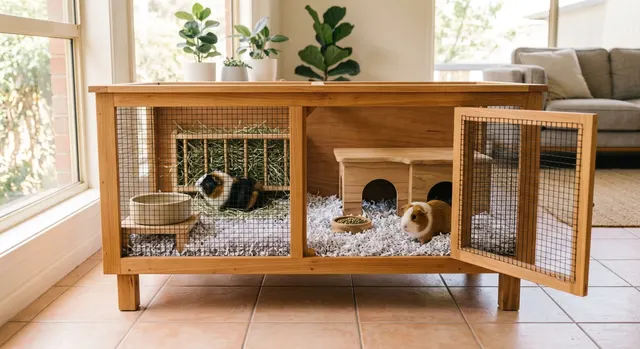
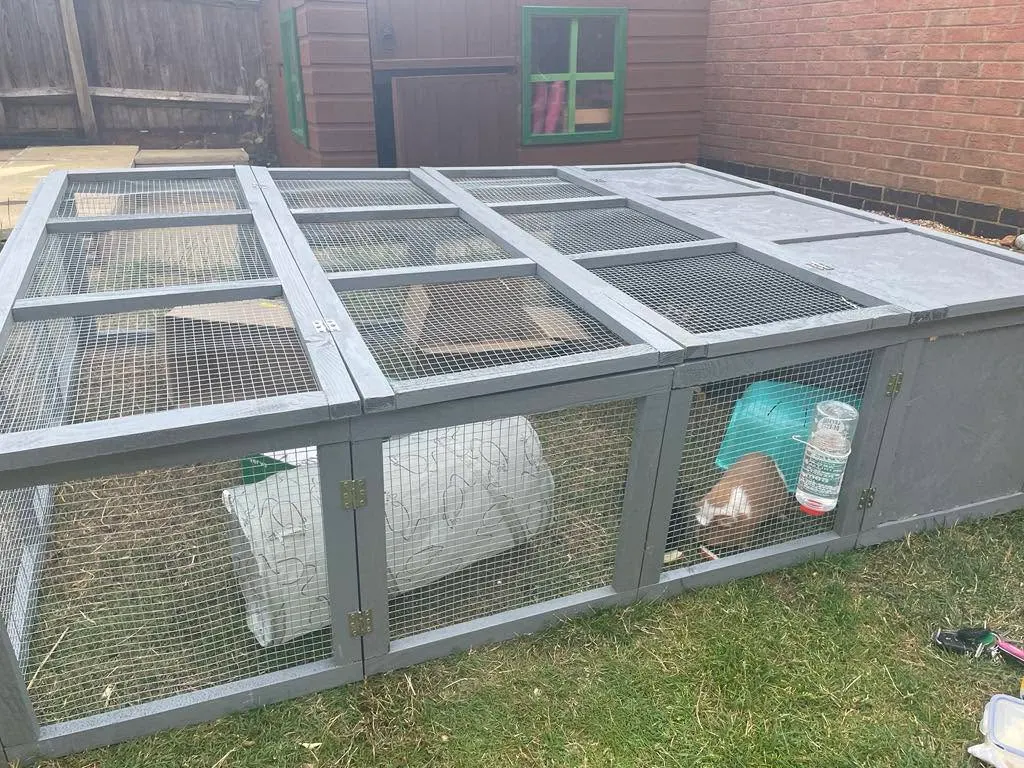
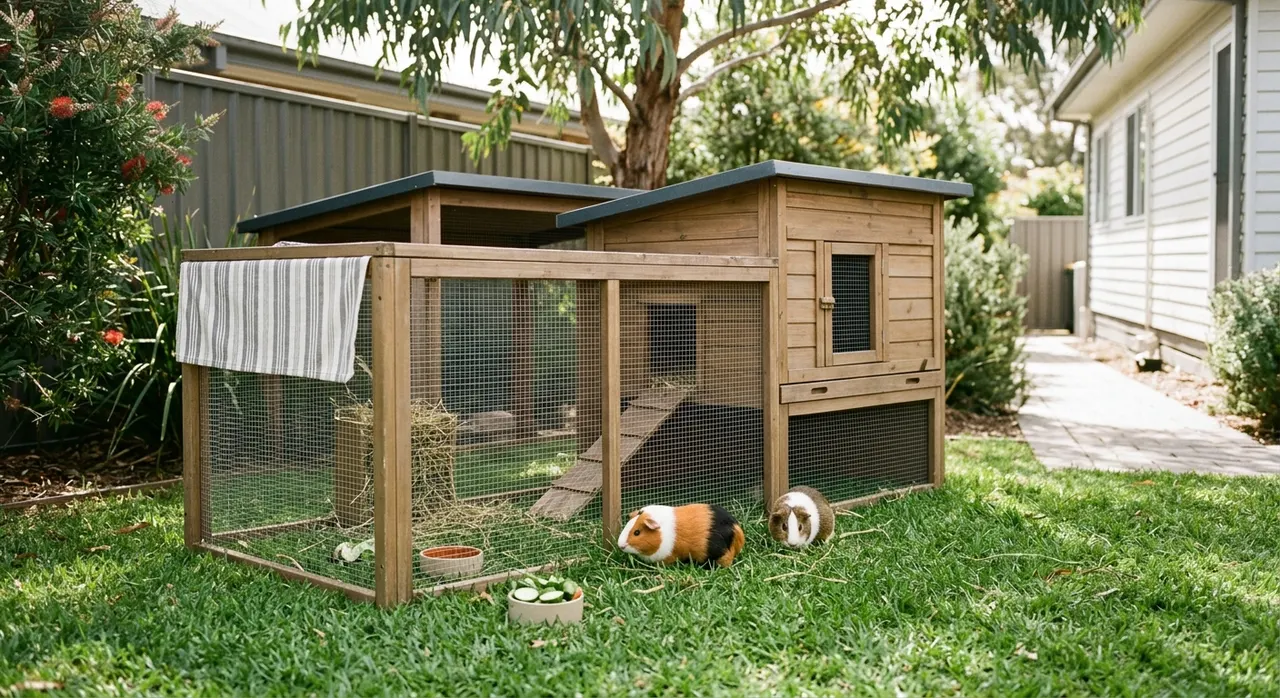
The enclosed, weatherproof hutch should have about 1 m² of floor for a pair on its own, with the run as extra space. RSPCA Australia describes the typical setup as a shelter with an attached run that is weatherproof and predator-safe, and PDSA suggests a hutch of at least 1.5 × 1 m with a 2 × 1 m run.
- The enclosed hutch on its own should meet the floor space guidance for your group: about 1 m² for a pair (see the size guide).
- The run is extra space for grazing and exercise. The bigger, the better.
- Choose a hutch with a large ground-level floor. Many “two-storey” hutches have small floors joined by steep ramps.
- Add hides. RSPCA UK suggests one more hide than you have guinea pigs, so two pigs need three.
Shopping for a hutch? Our outdoor hutch buying guide covers floor size, mesh, latches, timber and price ranges in detail.
Where should I put an outdoor guinea pig hutch?
Put it in full shade all day in summer, sheltered from wind and rain, on level ground that drains well and close to the house. Location matters as much as the hutch itself.
Good spots include under a verandah or a dense tree, and never in afternoon sun. PDSA advises that the run shouldn’t get too wet or muddy, and that hard surfaces like concrete can cause foot sores. Keep it close enough to the house that you’ll check on your pigs every day. For more on choosing a spot, see where to put a guinea pig cage.
How do I protect outdoor guinea pigs from predators?
Keep the hutch and run fully enclosed with strong welded mesh, secure the latches, stop anything digging under the run, and lock your pigs in the enclosed hutch at night. Foxes, dogs, cats and birds of prey will all target guinea pigs, and snakes are a risk in rural and bushland areas.
- Roof: RSPCA Australia says a roof may be needed where guinea pigs are at risk from dogs, cats or birds of prey. In most Australian backyards that risk is real, so give the run a mesh lid too.
- Digging: peg mesh flat under the run or add a mesh skirt around the edge to stop foxes and dogs digging in.
- Snakes: standard mesh won’t stop snakes. Use very fine mesh on the sleeping area and close every gap.
- Night: foxes are most active at night, so shut your pigs in the enclosed hutch before dark.
The outdoor hutch buying guide explains which mesh and latches to look for.
How do I care for outdoor guinea pigs in each season?
Bring them inside on hot days and very cold nights, keep bedding dry, and check them every day. Australian conditions vary a lot, so adjust the setup through the year.
- Summer: move the hutch to the coolest spot, add frozen water bottles wrapped in a towel, give several water containers and watery foods such as cucumber, and bring your pigs inside when the forecast is 28°C or more.
- Winter: in cold areas such as Canberra, Tasmania and Victoria’s high country, cover part of the hutch at night, add extra hay for burrowing, and keep bedding dry. RSPCA UK advises bringing guinea pigs indoors when it’s under 15°C. See our winter guide.
- Wet weather: make sure the run drains well and the hutch floor never sits in water.
- Sunlight: RSPCA Australia suggests direct sunlight 3–4 times a week, always with shelter available, so a run with partly open sky on mild days is ideal.
- Flystrike and pests: keep bedding clean and dry, and check bottoms daily in warm weather.
Should my guinea pigs live indoors or outdoors?
If you have a cool indoor space, indoors is usually easier in most of Australia, with supervised grazing outdoors on mild days. Outdoor housing works best in milder areas where you can reliably bring pigs in during heat and cold. Our indoor vs outdoor guide can help you decide.
Whichever you choose, keep at least two guinea pigs together, because RSPCA Australia says they are herd animals, and don’t house them with rabbits. See can guinea pigs and rabbits live together?.
Use our comparison table to see how outdoor hutches stack up against indoor cages and playpens.
Frequently asked questions
Can guinea pigs live outside in Australia?
expand_more
Yes. RSPCA Australia says guinea pigs can be kept indoors, outdoors or both. Outdoor pigs need a weatherproof, predator-safe hutch with an attached run, full shade all day in summer, and a plan to bring them inside on hot days, because RSPCA Australia notes heat stress can occur from 24°C.
Can guinea pigs live outside in a Queensland summer?
expand_more
It's risky. Guinea pigs are comfortable at 18–23°C with humidity under 50%, according to RSPCA Australia, and heat stress is most common over 28°C. Queensland's hot, humid summers make that hard to manage outdoors. In warm, humid areas, plan to bring pigs into a cool room on hot days, or keep them indoors and graze them outside on mild days.
Can guinea pigs stay outside in a Melbourne or Canberra winter?
expand_more
Only with extra protection, and not on the coldest nights. RSPCA UK advises bringing guinea pigs indoors when it drops under 15°C. In cold areas, cover part of the hutch at night, add extra hay for burrowing, keep bedding dry, and bring your pigs inside on very cold nights.
How do I protect outdoor guinea pigs from foxes and snakes?
expand_more
Use a fully enclosed hutch and run with strong welded mesh, latches that need two actions to open, and mesh pegged under or around the run so nothing can dig in. Lock pigs in the enclosed hutch at night, when foxes are most active. In rural and bushland areas, use very fine mesh on the sleeping area to keep snakes out.
What temperature is too hot for outdoor guinea pigs?
expand_more
RSPCA Australia says guinea pigs are comfortable at 18–23°C, heat stress can occur from 24°C and is most common over 28°C, and they should be watched closely once it passes 30°C. Guinea pigs can't sweat, so bring outdoor pigs into a cool room when the forecast is 28°C or more.
Is it cruel to keep guinea pigs in an outdoor hutch?
expand_more
Not if the setup meets their needs. A hutch is fine when the enclosed area has at least 1 m² for a pair, there's an attached run, full shade, protection from predators and weather, and at least one guinea pig companion. It becomes a welfare problem when the hutch is too small, in the sun, or the pigs are rarely checked.
Want a properly sized cage without the DIY?
We're looking at bringing properly sized cages and C&C kits to Australia. Join the waitlist and tell us what you'd want.
This guide is general information to help you compare housing options. It isn't veterinary advice. If your guinea pig seems unwell, contact a vet experienced with exotic pets.