Keeping guinea pigs cool in an Australian summer
What temperature is too hot for guinea pigs? Danger temperatures, signs of heat stress, and practical ways to keep guinea pigs cool in an Australian summer.

Guinea pigs are comfortable only between 18°C and 23°C, according to RSPCA Australia. Heat stress can start from 24°C and is most common above 28°C. On hot days, move them to the coolest room, ideally air-conditioned, and give frozen water bottles, extra water and shade. Signs of heat stress mean an immediate vet visit.
According to RSPCA Australia, guinea pigs are comfortable only from 18°C to 23°C. Heat stress can occur at temperatures as low as 24°C and is most commonly seen above 28°C. Once it's over 30°C, check your guinea pigs regularly for signs of heat stress. They also prefer humidity below 50%, so humid days are harder on them.
Guinea pigs descend from wild cavies of the Andes in South America, and they cope poorly with heat. In an Australian summer, heat is one of the biggest risks to their health.
What temperature is too hot for guinea pigs?
Anything above 23°C is outside a guinea pig’s comfort zone, and heat stress becomes a real risk from 24°C. RSPCA Australia says it is most common above 28°C and advises watching guinea pigs closely above 30°C.
Other welfare groups set similar limits:
| Source | Comfortable range | Heat risk |
|---|---|---|
| RSPCA Australia | 18–23°C | Heat stress possible from 24°C, most common above 28°C |
| PDSA | Not stated | Uncomfortable above 24°C, heatstroke possible above 27°C |
| RSPCA UK | 17–20°C | Heatstroke risk above 26°C |
| Humane World for Animals | About 18–24°C | Keep away from direct sun |
Guinea pigs have no sweat glands, according to RSPCA Australia, so they can’t cool themselves down the way people do. Humidity above 50% makes hot days even harder on them.
What are the signs of heat stress in guinea pigs?
The main signs of heat stress in guinea pigs are drooling, fast shallow breathing, a rapid heart rate, weakness and pale gums. RSPCA Australia lists these as warning signs that need a vet immediately.
- Lying stretched out flat and not wanting to move
- Fast, shallow breathing
- Drooling or wet fur around the mouth
- Rapid heart rate
- Pale gums
- Weakness, stumbling or not responding to you
Heat stress is an emergency. Move your guinea pig somewhere cool and go to a vet straight away. Ring ahead so the clinic is ready, and follow their advice on the way. Don’t spend time trying to treat it at home.
How should you prepare a guinea pig setup before summer?
Before summer, move the cage to the coolest spot you have, put a thermometer at guinea pig height, and plan where outdoor pigs will go on hot days. Humane World for Animals advises keeping guinea pigs out of direct sun and in a well-ventilated space.
- The cage is in the coolest room of the house, away from windows that get afternoon sun
- There's a thermometer at guinea pig height, because the floor can be cooler than a bench or table
- Outdoor hutches have full shade all day, and a plan to bring pigs inside on hot days
- You know your nearest vet who sees exotic pets, and their after-hours number
Our guide on where to put a guinea pig cage helps you pick the coolest spot.
How do you keep guinea pigs cool on a hot day?
Keep guinea pigs cool with air conditioning where possible, plus frozen water bottles, extra water, watery foods and shade. RSPCA Australia recommends moving them indoors or to the coolest spot, and suggests frozen water bottles, several water containers, watery foods, shade, and air conditioning or fans.
- Air conditioning is the most reliable option on very hot days. Keep the room cool, but make sure the cage isn’t in the direct airflow.
- Frozen water bottles wrapped in a tea towel give pigs something cool to lie against. Swap them as they thaw.
- Ceramic tiles or granite pavers chilled in the fridge make cool “lying pads”.
- Fans help move air around the room. Don’t point them directly at the cage for long periods.
- Extra water: add a second bottle or bowl and refill it with cool water through the day.
- Water-rich foods such as cucumber, melon, apple and cos lettuce can help with hydration (in moderation).
- Shade cloth and closed curtains reduce heat build-up in the room during the day.
In hot, humid weather, spot-clean more often too, because damp bedding attracts flies. Our cleaning guide explains why.
Can outdoor guinea pigs stay outside on hot days?
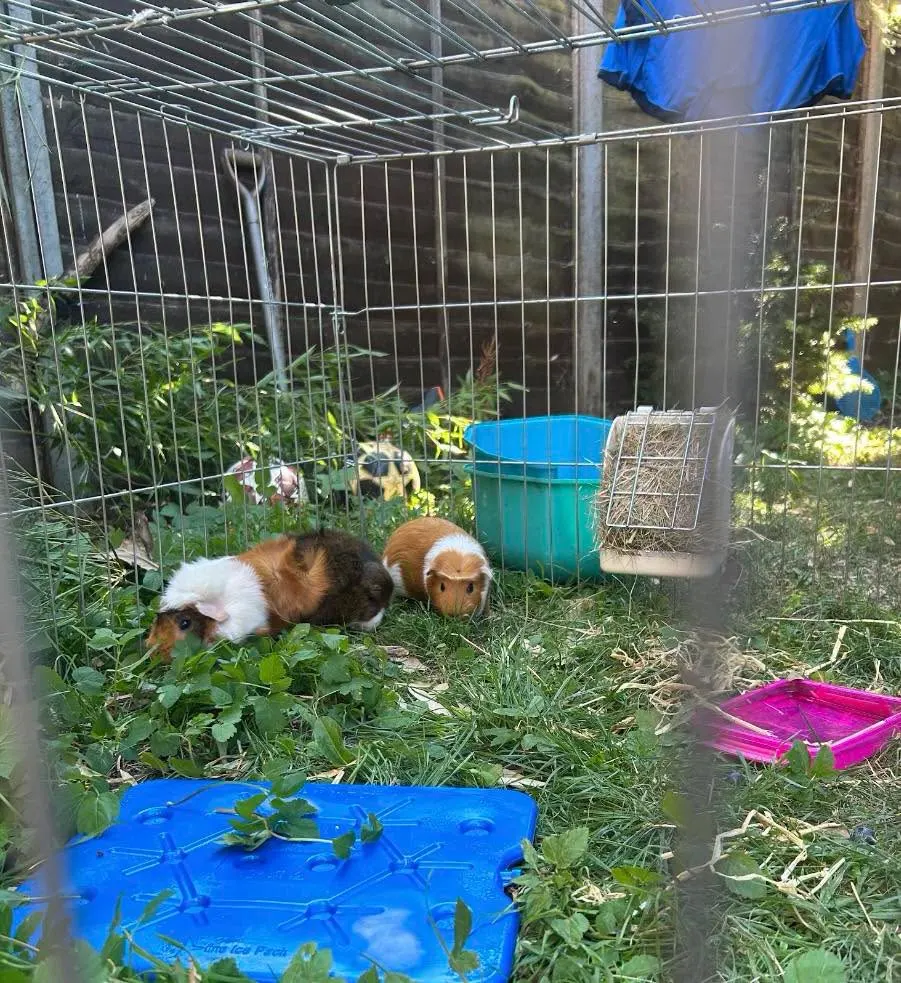
Outdoor guinea pigs should come inside on hot days, because hutches can become dangerously hot even in shade. When the forecast is 28°C or more, bring your guinea pigs inside to a cool room, such as a laundry or bathroom on a tiled floor, in a temporary pen or carrier with hay and water. Read more in our outdoor hutch guide and our comparison of indoor vs outdoor guinea pigs.
How do you protect guinea pigs during a heatwave?
During a heatwave, keep guinea pigs indoors in the coolest room day and night, and have a backup plan in case the power goes out. Nights may not cool down enough for guinea pigs to recover between hot days. Decide ahead of time where they’ll go and how you’ll keep that room cool without power. A few frozen bottles kept in an esky make a good backup.
For the opposite problem, see keeping guinea pigs warm in winter.
Frequently asked questions
What temperature is too hot for guinea pigs?
expand_more
RSPCA Australia says guinea pigs are comfortable only between 18°C and 23°C. Heat stress can occur from 24°C, is most common above 28°C, and above 30°C you should check them closely. UK groups give similar limits: PDSA says above 27°C could lead to heatstroke, and RSPCA UK says above 26°C.
What are the signs of heatstroke in guinea pigs?
expand_more
RSPCA Australia lists drooling or salivation, a rapid heart rate, shallow rapid breathing, weakness and pale gums as signs of heat stress. A guinea pig may also lie stretched out flat and not want to move. Heat stress is an emergency, so move the guinea pig somewhere cool and go to a vet immediately.
Do frozen water bottles help keep guinea pigs cool?
expand_more
Yes. RSPCA Australia suggests frozen water bottles as one way to help guinea pigs cope with heat. Wrap each bottle in a tea towel so your guinea pigs can lie against it without direct contact with ice, and swap bottles as they thaw. Keep a few spares in the freezer or an esky.
Are fans or air conditioning better for guinea pigs?
expand_more
Air conditioning is the most reliable way to keep guinea pigs cool on very hot days, because guinea pigs have no sweat glands and can't cool themselves well. Fans help move air around a room but do less to lower the temperature. Don't point either directly at the cage for long periods.
Can guinea pigs stay outside in a heatwave?
expand_more
No. Outdoor hutches can become dangerously hot even in shade, and RSPCA Australia advises moving guinea pigs indoors or to the coolest spot available in hot weather. Bring them inside to a cool room when the forecast reaches 28°C or more, and keep them in during heatwaves, when nights may not cool down enough.
What foods help guinea pigs stay hydrated in summer?
expand_more
RSPCA Australia suggests offering watery foods such as cucumber, melon and apple in hot weather, alongside several containers of fresh, cool water. Cos lettuce is another water-rich option. Offer fruit in moderation and keep unlimited grass hay available as the main part of the diet.
Want a properly sized cage without the DIY?
We're looking at bringing properly sized cages and C&C kits to Australia. Join the waitlist and tell us what you'd want.
This guide is general information to help you compare housing options. It isn't veterinary advice. If your guinea pig seems unwell, contact a vet experienced with exotic pets.