Guinea pig playpens: using a play pen as a cage or for floor time
How to choose a guinea pig playpen in Australia: panel, wire and fabric pens compared, working out floor area from panel count, flooring and safety tips.
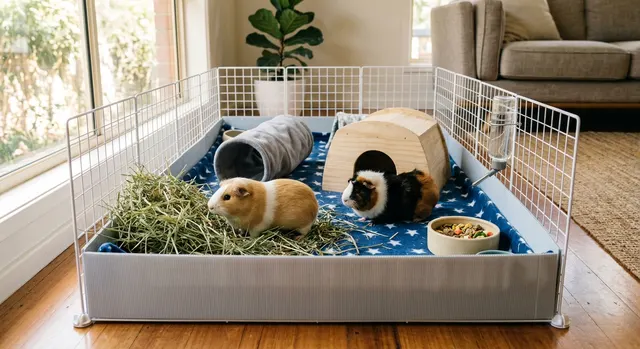
A guinea pig playpen can be a full-time home if it gives a pair at least 1 m² of flat floor, has walls at least 30 cm high, sits on a waterproof base and has a lid where cats or dogs can reach. RSPCA Australia recommends at least 2 m × 0.5 m for a pair. Clip-together plastic panel pens start at around $25 to $40.
A play pen for guinea pigs can be a roomy full-time enclosure, a floor-time space, a holding pen on cleaning day, or a supervised pen on the lawn. This guide covers what to look for in each case.
Can a playpen be a full-time home or just for floor time?
A playpen can be either, but a full-time pen has to meet the same size and safety guidance as a cage, while a floor-time pen only has to be escape-proof and safe to chew. Decide how you’ll use it before you buy.
- As a full-time enclosure, the pen needs at least 1 m² of flat floor for a pair, walls at least 30 cm high, a solid waterproof floor, and a lid if cats or dogs can reach it. RSPCA Australia recommends at least 2 m × 0.5 m (10,000 cm²) for a pair and enclosures at least 30 cm high. Humane World for Animals also recommends walls of at least 30 cm. See the size guide.
- For supervised floor time, the pen can be bigger and simpler, since you’ll be close by. Height and lids matter less, but the pen still has to be escape-proof and safe to chew.
What types of guinea pig playpens are there?
There are three main types of guinea pig playpen: plastic panel pens, wire exercise pens and fabric pop-up pens. Plastic panel pens suit full-time use best, and fabric pens suit short supervised sessions only.
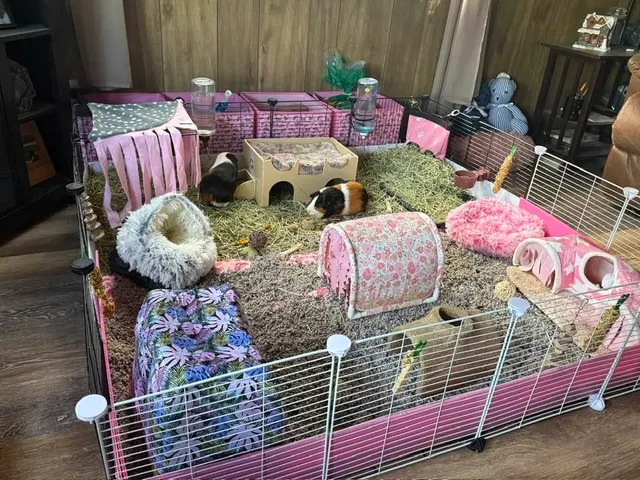
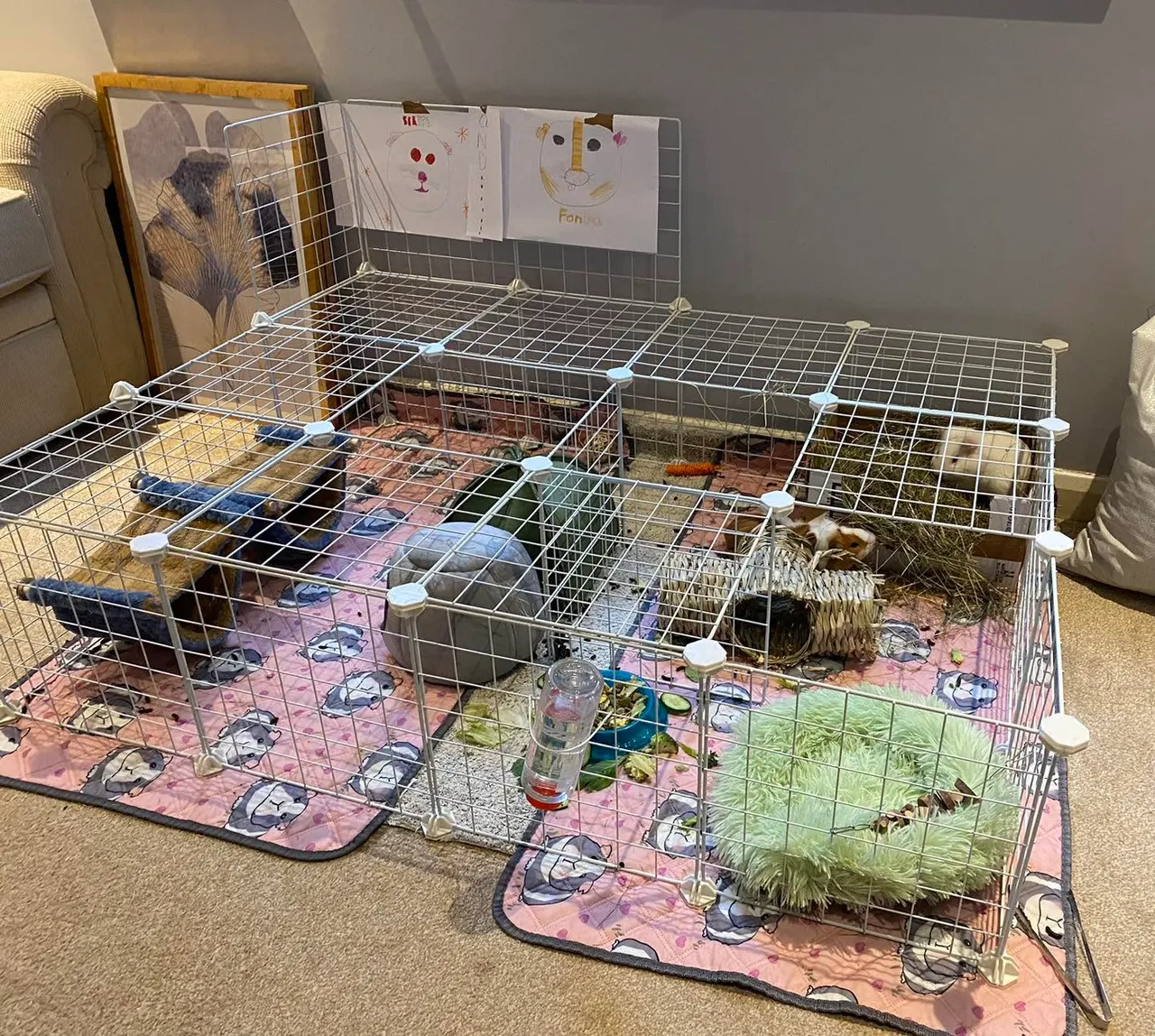
Solid or clear plastic panel pens
These are made from clip-together plastic panels and are the most popular choice for guinea pigs. Some come with a waterproof floor mat. Budget panel sets start at around $25 to $40 at hardware and pet stores, while larger kits with a floor cost more.
- Good for: full-time enclosures and floor time.
- Watch for: light panels that shift if they aren’t clipped together firmly, and no lid.
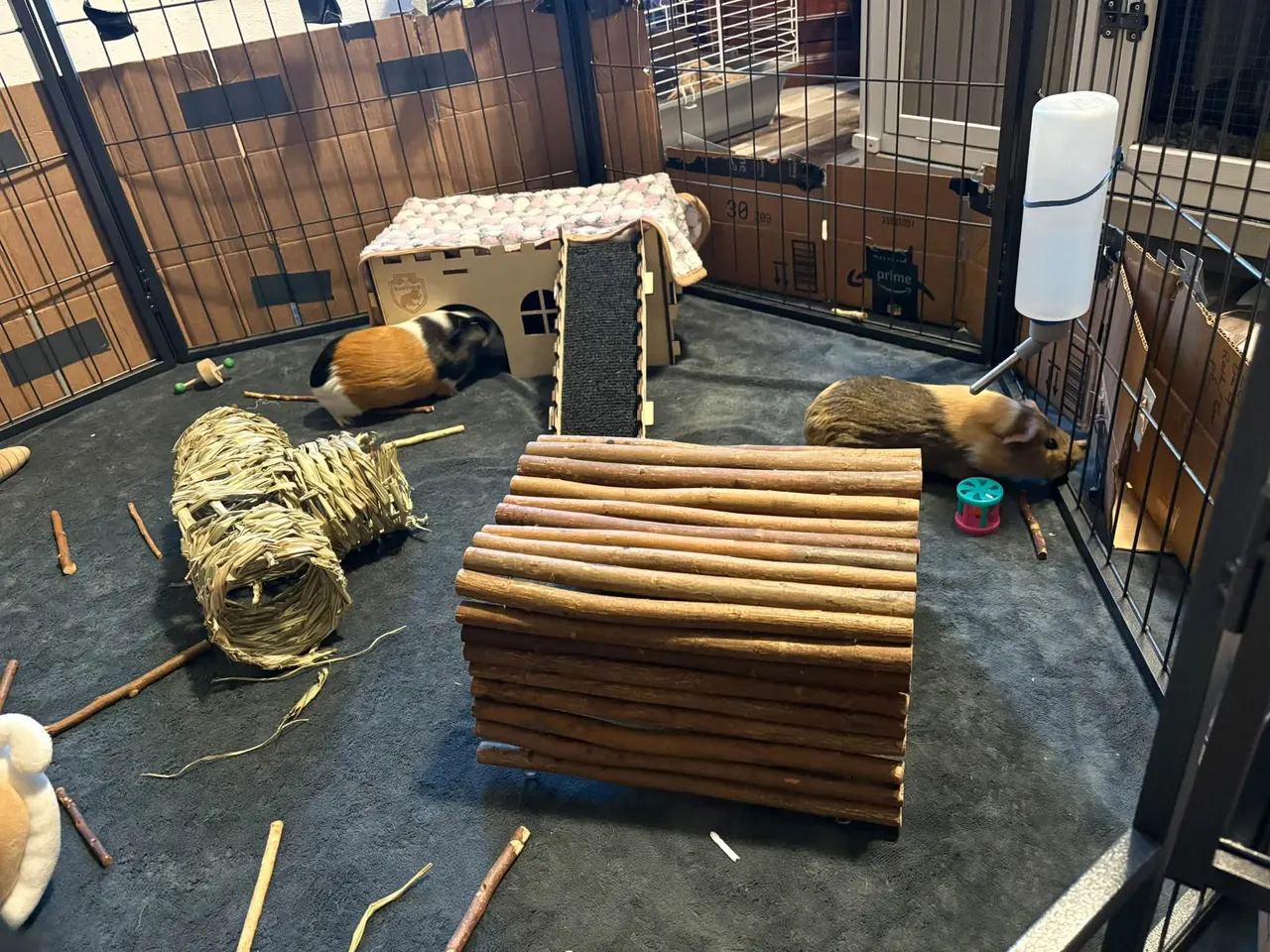
Wire exercise pens
Wire pens sold for dogs and rabbits fold flat and are quick to set up. They can work well for floor time, as long as the gaps between the bars are small enough that a guinea pig can’t squeeze through or get its head stuck. Young and small pigs need the smallest gaps.
- Good for: floor time and bigger play areas.
- Watch for: wide bar spacing, and no floor. Put a waterproof layer underneath indoors.
Fabric pop-up pens
Soft fabric pens are light and handy for travel, but guinea pigs can chew through the mesh, and the walls are easy to push over.
- Good for: short, supervised sessions only.
- Watch for: chewing. Don’t use one as a permanent home.
How do you work out a playpen’s floor area?
Work out a playpen’s floor area by multiplying the pen’s length by its width in centimetres and dividing by 10,000 to get m². Playpens are usually sold by panel count, not floor size, so do the maths before you buy:
- Check the width of one panel and which way up it goes. A panel listed as 30 × 40 cm could be 40 cm wide and 30 cm high, or the other way round.
- Plan a rectangle. For example, 12 panels that are 40 cm wide can make a pen 4 panels long and 2 panels wide: 160 × 80 cm, or about 1.28 m².
- Multiply length by width and divide by 10,000 to get m². Compare the result with the size calculator for your group.
A long rectangle is better than a square or circle of the same area, because it gives your guinea pigs a proper straight run. RSPCA Australia also says rectangular enclosures are better than square ones.
What should you put under a guinea pig playpen?
Put a waterproof layer under a guinea pig playpen, such as a lino offcut, a Corflute tray or a waterproof sheet. Most playpens don’t come with a floor, and guinea pig urine will soak into carpet and damage timber. Good options include:
- A lino or vinyl offcut from a flooring shop, which is cheap, waterproof and easy to wipe
- A Corflute tray made the same way as a C&C cage base
- A waterproof sheet or tarp with fleece and towels on top, which is fine for floor time but can get chewed if left long term
Then add bedding or fleece as you would in any cage. RSPCA Australia recommends dust-free bedding and advises against wood shavings. Our bedding guide compares the options.
Can you use a guinea pig playpen outdoors?
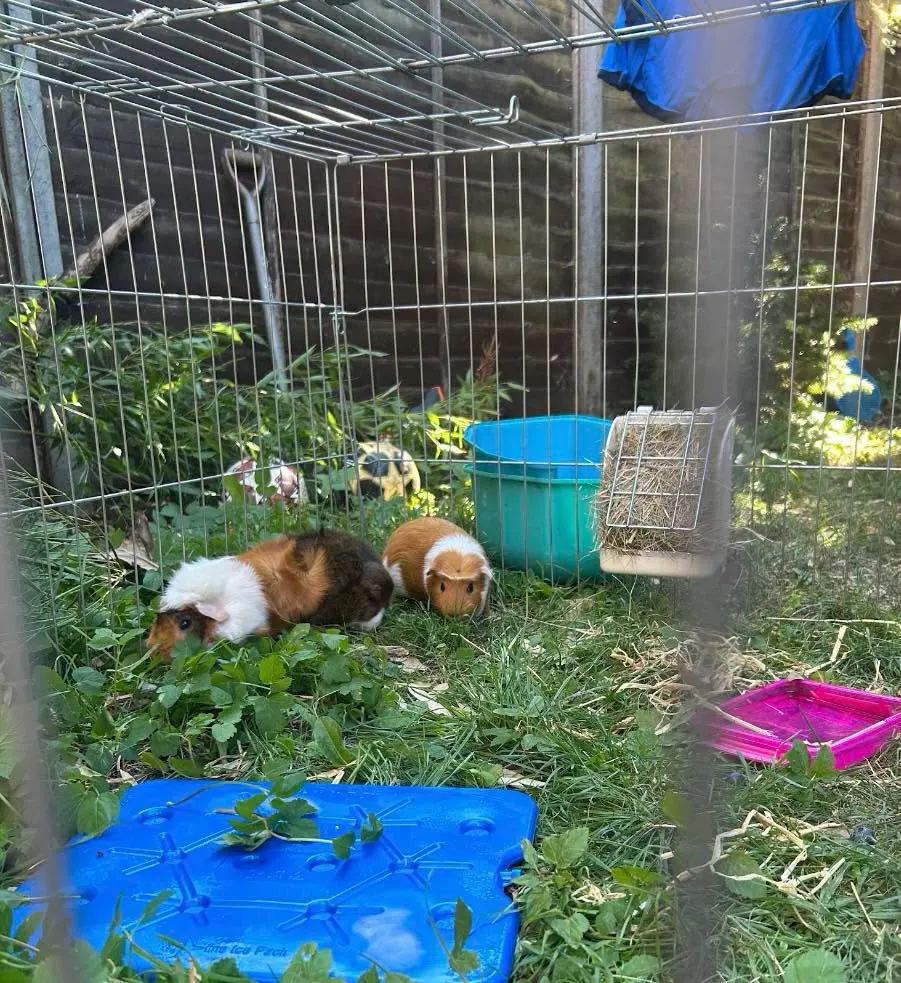
Yes, a playpen on the lawn is a good way to let guinea pigs graze on mild days, but only with someone watching. Most pens have no lid and no floor, so they don’t stop birds of prey, cats, dogs or foxes, and a determined pig can dig or push its way out. RSPCA Australia says a roof may be needed wherever guinea pigs are at risk from dogs, cats or birds of prey.
Always give full shade and water, and make sure the grass hasn’t been treated with pesticides or fertilisers. Bring your pigs in well before it gets hot. RSPCA Australia notes guinea pigs are comfortable at about 18–23°C, heat stress can occur from 24°C and it is most common above 28°C. See our summer heat guide for more.
Playpen safety checklist
A safe guinea pig playpen has no escape gaps, firmly clipped panels, walls at least 30 cm high for full-time use, protection from other pets, and a hide, hay and water for each pig.
- No gaps a guinea pig could squeeze through or get its head stuck in
- Panels clipped together firmly so they can't be pushed apart
- Walls at least 30 cm high for a full-time enclosure
- A lid, or a room other pets can't get into
- No electrical cords, houseplants or furniture gaps within reach of the pen
- A hide for each pig, plus hay and water. RSPCA UK suggests one more hide than the number of guinea pigs.
Want to compare a playpen with other indoor options? Read about indoor cages, playpens and hutches, or see which pens we’ve looked at in our researched picks.
Frequently asked questions
Can a playpen be used as a permanent guinea pig cage?
expand_more
Yes, if it meets the same size guidance as any cage. A pair needs at least 1 m² of flat floor, walls at least 30 cm high, a solid waterproof floor underneath and a lid if cats or dogs can reach it. Clip-together plastic panel pens are the most common choice for a full-time enclosure.
How big should a guinea pig playpen be for 2 guinea pigs?
expand_more
At least 1 m² of floor, and a long rectangle is better than a square. For example, 12 panels that are 40 cm wide can make a pen 160 × 80 cm, about 1.28 m². RSPCA Australia recommends at least 2 m × 0.5 m for a pair, with larger preferable.
How much does a guinea pig playpen cost in Australia?
expand_more
Budget plastic panel sets start at around $25 to $40 at hardware and pet stores. Larger kits that include a floor cost more. With a DIY floor such as a lino offcut or Corflute tray, a panel playpen can give a pair 1 m² or more for about $50 to $80.
What do you put under a guinea pig playpen?
expand_more
Use a waterproof layer, because guinea pig urine soaks into carpet and damages timber. Good options are a lino or vinyl offcut, a folded Corflute tray like a C&C cage base, or a waterproof sheet with fleece and towels on top. Then add bedding or fleece as you would in any cage.
Are wire dog pens safe for guinea pigs?
expand_more
They can work for floor time if the gaps between the bars are small enough that a guinea pig can't squeeze through or get its head stuck. Young and small pigs need the smallest gaps. Wire pens have no floor, so put a waterproof layer underneath when using one indoors.
Can I put a guinea pig playpen on the lawn?
expand_more
Yes, on mild days and only with someone watching. Most pens have no lid or floor, so they don't stop birds of prey, cats, dogs or foxes, and pigs can dig or push out. Give full shade and water, use untreated grass, and bring pigs in before it gets hot, as RSPCA Australia says heat stress can occur from 24°C.
Want a properly sized cage without the DIY?
We're looking at bringing properly sized cages and C&C kits to Australia. Join the waitlist and tell us what you'd want.
This guide is general information to help you compare housing options. It isn't veterinary advice. If your guinea pig seems unwell, contact a vet experienced with exotic pets.