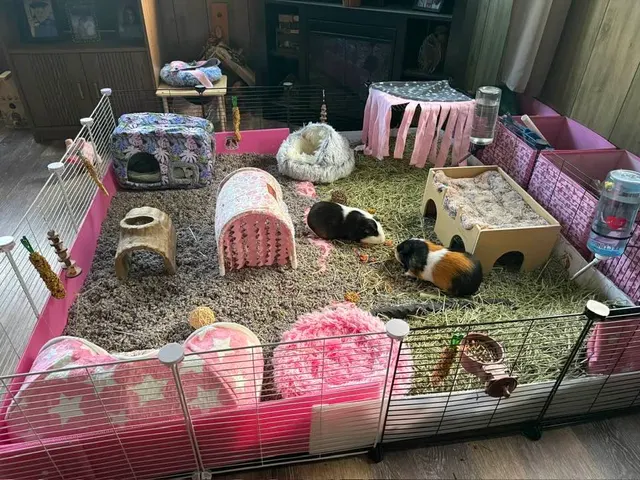
How to clean a guinea pig cage (daily, weekly and deep clean)
How often to clean a guinea pig cage, what to spot-clean daily, a step-by-step weekly clean-out, safe cleaning products, and tips for fleece and C&C cages.

Spot-clean a guinea pig cage every day. RSPCA Australia recommends cleaning at least 2–3 times a week and changing all bedding at least once a week. For the weekly clean-out, wipe the base with a pet-safe cleaner or a 50:50 white vinegar and water mix, rinse, and let it dry fully. Scrub everything monthly.
A clean cage keeps guinea pigs healthy and stops smells before they start. Guinea pigs are messy eaters but clean animals, and a little cleaning every day is much easier than an occasional big scrub.
How often should you clean a guinea pig cage?
Spot-clean a guinea pig cage every day, do a full clean at least 2–3 times a week, and change all the bedding at least once a week. That is the routine RSPCA Australia recommends.
UK welfare groups give a similar schedule. RSPCA UK recommends spot-cleaning daily and a deep clean at least weekly. PDSA suggests a daily clean, a weekly thorough clean, and a monthly full empty and scrub with a pet-safe cleaner, including toys and shelters.
| How often | What to do | Time |
|---|---|---|
| Daily | Remove droppings, wet bedding and old fresh food, refresh hay and water | 5–10 minutes |
| 2–3 times a week | Replace soiled bedding in toilet areas, change fleece liners | 10–20 minutes |
| Weekly | Full clean-out and complete bedding change | 30–45 minutes |
| Monthly | Deep clean: scrub the base, check and replace worn items | Longer |
What should you clean every day?
Every day, remove droppings, wet patches, soiled hay and uneaten fresh food, and refresh the hay and water. This daily spot-clean takes 5–10 minutes.
- Remove droppings, wet patches and soiled hay, especially in the toilet or "kitchen" corner
- Refresh hay so there's always a big, clean supply
- Empty, rinse and refill water bottles or bowls
- Remove uneaten fresh veggies before they spoil
- Quick health check: bright eyes, clean nose and bottom, eating and pooping normally
How do you do a weekly guinea pig cage clean-out?
A weekly clean-out means taking everything out, wiping the base with a pet-safe cleaner or diluted vinegar, letting it dry, and putting in completely fresh bedding. It takes about 30–45 minutes.
- Move your guinea pigs to a safe playpen or carrier with hay and water.
- Remove all bedding or fleece, hides and accessories.
- Wipe the base with a pet-safe cleaner or a 50:50 mix of white vinegar and water. Vinegar is great for dissolving the white urine scale that builds up.
- Rinse or wipe with clean water and let it dry completely.
- Wash bowls, bottles and hides in hot soapy water, then rinse well.
- Put down fresh bedding and move the hides around. A new layout keeps things interesting for your pigs.
What does a monthly deep clean involve?
A monthly deep clean is a full empty and scrub of the cage, plus a check for damaged or worn items. PDSA recommends cleaning toys and shelters as part of it.
- Scrub the corners of the Corflute or cage base where urine scale builds up.
- Check grids, connectors and latches for damage or sharp edges.
- Replace chewed hides, toys and worn fleece.
- Wash water bottle nozzles with a small brush.
What cleaning products are safe for guinea pig cages?
The safest cleaning products for a guinea pig cage are a pet-safe cleaner labelled for small animals, or a 50:50 mix of white vinegar and water. Guinea pigs have sensitive airways, so avoid strongly scented products, essential oils and leftover bleach. If you use a disinfectant, choose one labelled safe for small animals, follow the dilution instructions and rinse well.
How do you clean fleece liners?
Clean fleece liners by brushing off droppings and hay every day and washing them every 2–3 days without fabric softener.
- Shake or brush the fleece outside every day. A handheld vacuum or rubber broom makes this much quicker.
- Brush off as much hay and fur as possible before washing to protect your machine.
- Wash with an unscented detergent and skip the fabric softener, because it stops liquid soaking through the fleece.
Our bedding guide compares fleece with paper bedding and other options.
How do you stop a guinea pig cage from smelling?
A guinea pig cage stays fresh when toilet areas are spot-cleaned daily, bedding is changed completely at least weekly, and urine scale is scrubbed off regularly. Absorbent paper bedding in the “kitchen” corner, where most toileting happens, makes daily cleaning quicker. A cage that’s too small also gets dirty faster, so check it against our size calculator. Our guide to guinea pig cage smell covers the common causes in more detail.
How should you clean in hot, humid weather?
In hot, humid weather, spot-clean more often and check your guinea pigs’ bottoms daily. Damp, soiled bedding attracts flies, and flystrike can be life-threatening. If you see a guinea pig with a dirty bottom or any sign of maggots, see a vet straight away. For more hot-weather advice, see our summer heat guide.
Frequently asked questions
How often should you clean a guinea pig cage?
expand_more
Spot-clean every day, removing droppings, wet bedding and uneaten fresh food. RSPCA Australia recommends cleaning the enclosure at least 2–3 times a week and changing the bedding completely at least once a week. PDSA also suggests a monthly full empty and scrub of the cage with a pet-safe cleaner.
Can I use vinegar to clean a guinea pig cage?
expand_more
Yes. A 50:50 mix of white vinegar and water is a popular way to wipe down a guinea pig cage base, and it is good at dissolving the white urine scale that builds up in corners. Rinse or wipe with clean water afterwards and let the cage dry completely before adding fresh bedding.
What cleaning products are safe for guinea pig cages?
expand_more
Use a pet-safe cleaner labelled safe for small animals, or diluted white vinegar. Follow the dilution instructions and rinse well. Avoid strongly scented products, essential oils and leftover bleach, because guinea pigs have sensitive airways. Wash bowls, bottles and hides in hot soapy water and rinse them thoroughly.
How do I stop my guinea pig cage from smelling?
expand_more
Spot-clean toilet areas every day, change bedding completely at least weekly, and scrub off urine scale regularly. A kitchen corner of absorbent paper bedding under the hay rack, where most toileting happens, makes daily cleaning quicker. A cage that is too small also gets smelly faster, so check the floor space.
How do you clean fleece guinea pig bedding?
expand_more
Shake or brush the fleece outside every day to remove droppings and hay. Brush off as much hay and fur as possible before washing, then wash every 2–3 days with an unscented detergent. Skip fabric softener, because it stops liquid soaking through the fleece to the absorbent layer underneath.
Where do guinea pigs go while I clean the cage?
expand_more
Move them to a safe playpen or carrier with hay and water while you clean. Keep them somewhere cool and quiet, away from other pets. Put them back only once the cage has dried completely and fresh bedding is down.
Want a properly sized cage without the DIY?
We're looking at bringing properly sized cages and C&C kits to Australia. Join the waitlist and tell us what you'd want.
This guide is general information to help you compare housing options. It isn't veterinary advice. If your guinea pig seems unwell, contact a vet experienced with exotic pets.