Indoor vs outdoor guinea pigs in Australia: which is better?
Should guinea pigs live indoors or outdoors in Australia? Heat, predators, social contact and space compared, plus how to combine both.

In most of Australia, indoors is the easier and safer choice. RSPCA Australia says guinea pigs are comfortable at 18–23°C and heat stress can occur from 24°C, which is easier to control inside. Outdoor housing can work in milder areas with a shaded, predator-safe hutch and run, daily checks, and a plan to bring pigs in on hot days.
RSPCA Australia says guinea pigs can be kept indoors, outdoors, or both. The best choice depends on your climate, your space and your household.
How do indoor and outdoor guinea pig housing compare?
Indoors wins on temperature control, predator safety and social contact. Outdoors makes it easier to give a large space and natural grazing. This table compares an indoor guinea pig cage with an outdoor hutch.
| Indoors | Outdoors | |
|---|---|---|
| Temperature control | Much easier, especially with air-conditioning | Hard in summer, and cold nights in some regions |
| Predators | Low risk, apart from household cats and dogs | Foxes, cats, dogs, birds of prey and snakes |
| Social contact | Lots of time with the family | Less interaction, so bonding takes effort |
| Space | Limited by room size | Easier to give a large hutch and run |
| Grazing | Needs supervised outdoor time | Natural grass access in the run |
| Noise and smell | Needs regular cleaning, and expect squeaking at feeding time | Not an issue inside the house |
Why is indoors usually easier in Australia?
Because heat is the biggest risk to Australian guinea pigs, and a cool room is the simplest way to control it. RSPCA Australia says heat stress can occur from 24°C and is most common over 28°C, and guinea pigs have no sweat glands to cool themselves.
An indoor cage in a cool room keeps them safe for most of the year. Indoor guinea pigs also tend to become more confident and friendly, because they see you every day. Keep the cage away from direct sun, heaters and draughts, as Humane World for Animals advises. Our guide to where to put a guinea pig cage covers the best spots, and indoor cages, pens and hutches compared helps you choose an enclosure.
When can guinea pigs live outdoors?
Outdoor housing can work well in milder areas, if the setup keeps pigs cool, dry and safe from predators. RSPCA Australia describes good housing as a shelter with an attached run that is weatherproof and predator-safe.
You’ll need:
- A fully shaded, predator-proof hutch with a solid floor and an attached run
- A plan to bring the pigs inside on hot days and during heatwaves, and on very cold nights (RSPCA UK advises bringing them in when it’s under 15°C)
- Daily visits for feeding, cleaning and health checks
Read our guide to keeping guinea pigs outdoors safely for the details, and the outdoor hutch buying guide before you buy.
Can you combine indoor and outdoor housing?
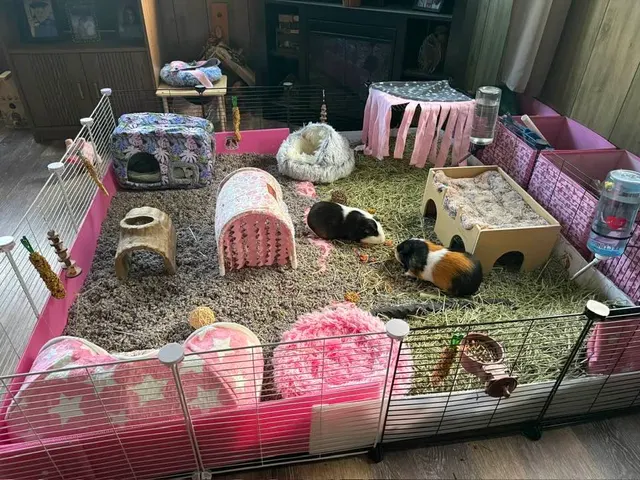
Yes, and many Australian owners do. They keep guinea pigs indoors in a C&C cage or playpen and use a portable outdoor run or playpen on mild, overcast days for supervised grazing.
This also gives them the direct sunlight that RSPCA Australia suggests 3–4 times a week, as long as shelter is always available. Make sure the lawn hasn’t been treated with pesticides or fertilisers, provide shade and water the whole time, and never leave them alone outside.
What matters whichever you choose?
Space, company and temperature matter indoors and out. Get these three right and your guinea pigs will be well housed either way.
- Meet the floor space guidance: about 1 m² for a pair, or RSPCA Australia’s 2 m × 0.5 m. Check your setup with the size calculator.
- Keep at least two guinea pigs together, because RSPCA Australia says they’re herd animals.
- Keep them in their comfort zone, ideally 18–23°C with humidity under 50%.
Frequently asked questions
Is it better to keep guinea pigs indoors or outdoors in Australia?
expand_more
For most Australian homes, indoors is easier. RSPCA Australia says guinea pigs are comfortable at 18–23°C and heat stress can occur from 24°C, which is much easier to manage in a cool room. Outdoor housing can work in milder areas with a shaded, predator-safe hutch and a plan to bring pigs inside on hot days.
Can guinea pigs live outside in Queensland or northern Australia?
expand_more
It's hard to do safely. RSPCA Australia says guinea pigs prefer 18–23°C and humidity under 50%, and heat stress is most common over 28°C. Hot, humid climates regularly exceed that. If you live somewhere warm and humid, an indoor cage in a cool or air-conditioned room is the safer choice, with outdoor grazing on mild days.
Can outdoor guinea pigs cope with a Melbourne or Canberra winter?
expand_more
They need extra help. RSPCA UK advises bringing guinea pigs indoors when it drops under 15°C, and PDSA recommends extra bedding when it's very cold. In cold areas, cover part of the hutch at night, add plenty of hay for burrowing, keep bedding dry, and bring your pigs inside on the coldest nights.
Do indoor guinea pigs need to go outside?
expand_more
They don't have to live outside, but supervised outdoor time is good for them. RSPCA Australia suggests direct sunlight 3–4 times a week with shelter available. Use a portable run or playpen on mild, overcast days, on lawn that hasn't been treated with pesticides or fertilisers, with shade and water, and never leave them alone.
Are indoor guinea pigs friendlier than outdoor ones?
expand_more
They often become more confident, because they see and hear their family every day. Outdoor guinea pigs can be just as friendly, but bonding takes more effort because they get less day-to-day contact. Daily handling, feeding and health checks help either way.
What temperature should a guinea pig room be?
expand_more
RSPCA Australia says guinea pigs are comfortable at 18–23°C with humidity under 50%. Humane World for Animals suggests about 18–24°C and advises keeping cages away from direct sun, heaters and draughts. In most Australian homes, that means a cool, shaded room, with air conditioning or fans on hot days.
Want a properly sized cage without the DIY?
We're looking at bringing properly sized cages and C&C kits to Australia. Join the waitlist and tell us what you'd want.
This guide is general information to help you compare housing options. It isn't veterinary advice. If your guinea pig seems unwell, contact a vet experienced with exotic pets.