Guinea pig cage ideas: enrichment and layouts to stop boredom
Cheap, safe guinea pig cage ideas: zoned layouts, hides, tunnels, foraging boxes, safe chews and DIY toys. Plus how to tell if your guinea pig is bored.

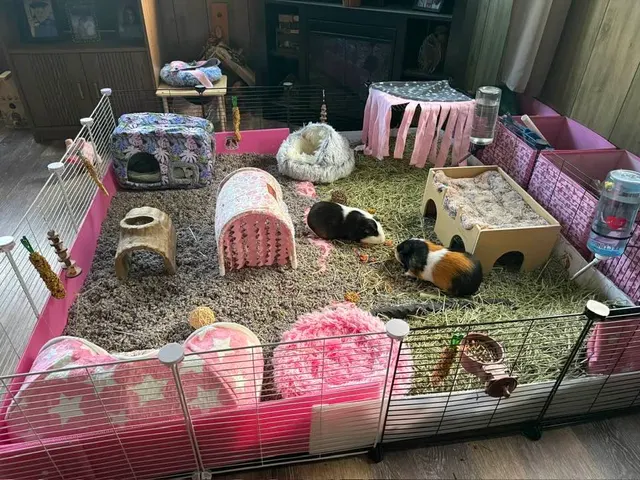
The best guinea pig cage ideas are simple: a big floor to run on, a hide for each pig plus one, tunnels, hay to forage in, safe chews, and a companion guinea pig. Split the cage into zones (kitchen, bedroom and open space) and move things around every week or two. Most enrichment costs next to nothing.
Guinea pigs don’t play fetch or use toys the way dogs and cats do. What keeps them happy is space, company, somewhere to hide and things to explore and forage. Here’s how to set up a cage they’ll love, mostly with things you already have.
Start with the basics
No toy makes up for:
- A cage that’s too small. A pair needs at least 1 m² of floor. Space to run and popcorn is the best enrichment there is. See is your guinea pig cage too small?
- Living alone. Guinea pigs are herd animals and should live with at least one other guinea pig.
- Too little hay. Unlimited fresh hay gives them something to eat, burrow in and forage through all day.
Idea 1: Zone the cage
A zoned layout makes the cage feel bigger, more interesting and easier to clean:
- Kitchen: hay rack or hay pile, pellets, veggies and water. Pigs pee a lot where they eat, so a litter tray or extra paper bedding here makes spot-cleaning easy.
- Bedroom: hides and fleece cosies in a quieter corner.
- Open space: a clear run through the middle for zoomies.
- Activity area: tunnels, a fleece forest or a foraging box.
In a long cage, put the kitchen at one end and the bedroom at the other, so pigs walk the length of the cage several times a day.
Idea 2: Hides with two exits
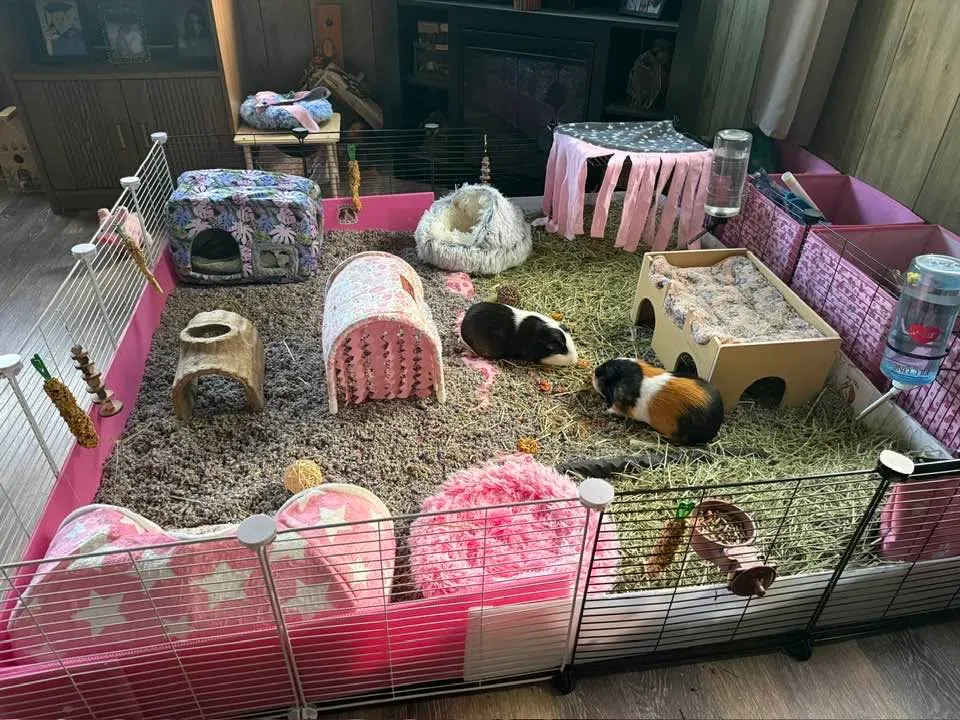
Give one hide per pig, plus one extra, so nobody gets shut out. Hides with two entrances are ideal, because a pig can’t be cornered inside by a bossy cage mate. Good options:
- Wooden hideys and bridges
- Fleece cosies and hanging hammocks at floor level
- Cardboard boxes with two doors cut in
- Hay houses, which double as a snack
Idea 3: Tunnels and fleece forests
- Tunnels: fleece tunnels, cardboard tubes, or large-diameter untreated wicker or seagrass tunnels. Make sure they’re wide enough that a pig can’t get stuck.
- Fleece forest: strips of fleece tied to a grid panel hung low over part of the cage, so pigs can push through and hide underneath. Most pigs love it.
Idea 4: Foraging
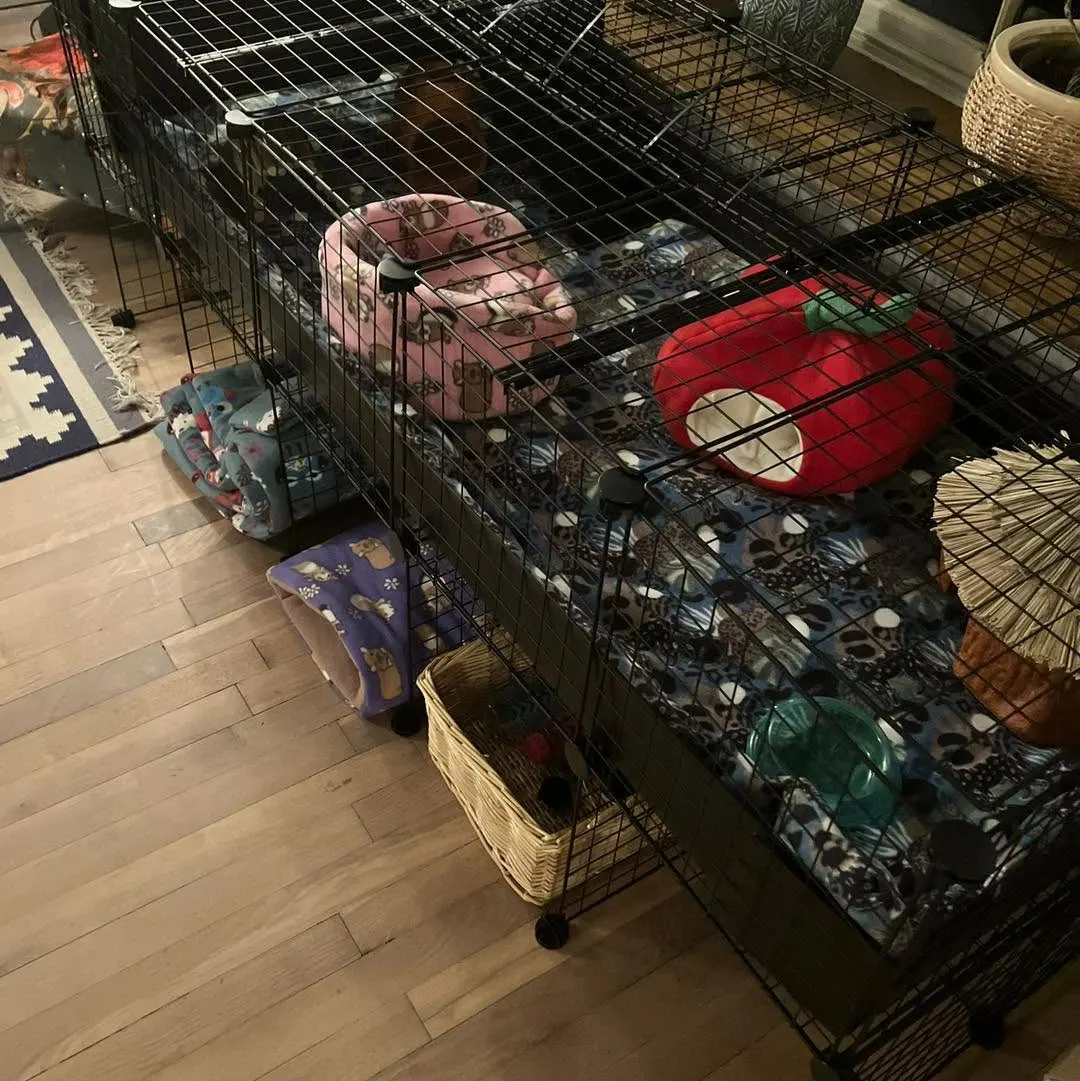
Guinea pigs are natural grazers and foragers. Make them work a little for their food:
- Foraging box: a shallow cardboard box of hay with a few veggie pieces or herbs hidden inside
- Stuffed toilet rolls: pack a cardboard tube with hay and a sprig of parsley or coriander
- Scatter feeding: spread pellets or chopped veggies around the cage instead of using one bowl
- Snuffle mat: a fleece foraging mat to hide herbs in
- Hay in different places: a hay rack, a hay pile and a stuffed hide
Idea 5: Safe things to chew
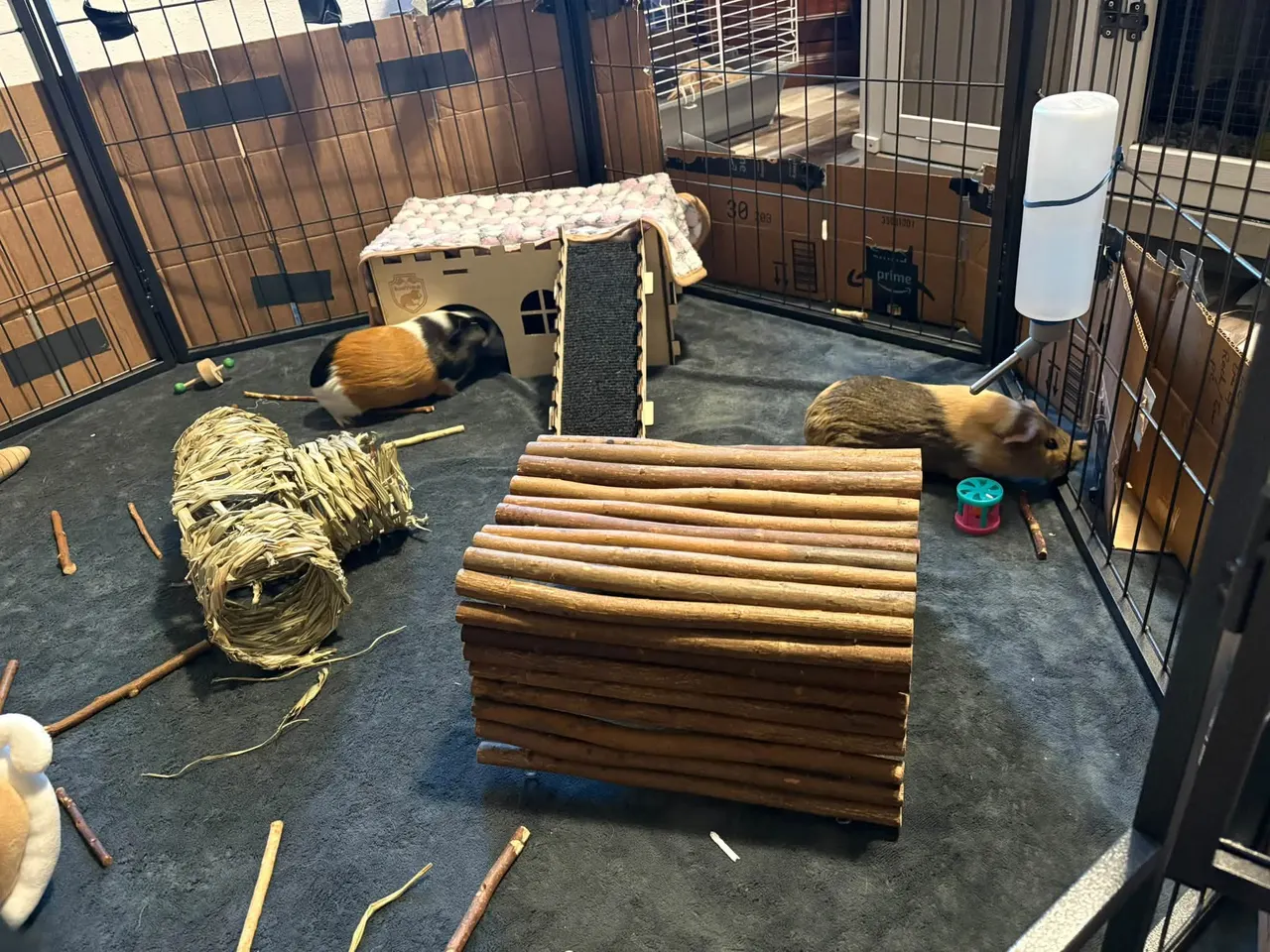
Guinea pigs’ teeth never stop growing, so chewing is good for them. Safe options:
- Untreated apple or willow sticks
- Willow balls and seagrass toys
- Plain cardboard: boxes, tubes and egg cartons with no glue, tape or glossy print
- Hay-based chews
What to avoid
- Hamster wheels and exercise balls. They can injure guinea pigs’ backs and feet.
- Soft plastic, rubber and foam, which can cause blockages if eaten.
- Painted, varnished or treated wood, and wood of unknown type.
- Strings, ribbons and loose threads that can wrap around legs.
- Salt licks and seed sticks, which aren’t needed and are high in sugar or salt.
- Tall levels and steep ramps. If you add a loft, see lofts and ramps: are they safe?
Idea 6: Rotate things every week or two
Guinea pigs notice change. On cleaning day, move hides and tunnels to new spots, swap in a fresh cardboard box, or add a new foraging item. Keep the water, main hay area and bedroom roughly where they were so they still feel secure.
Idea 7: Floor time outside the cage
A daily session in a safe playpen gives new sights and smells. It also helps pigs get comfortable around you. In warm weather, supervised time on pesticide-free grass in the shade is a treat, but bring them in well before the day heats up.
Signs your guinea pig may be bored
- Chewing the cage bars
- Barbering or overgrooming
- Sitting in one spot most of the day
- Weight gain
- More squabbling than usual
These can also be signs of illness, stress or a cage that’s too small, so rule those out first. For the full list of cage essentials, see the first cage setup checklist.
Frequently asked questions
How do I keep my guinea pig entertained in its cage?
expand_more
Give them room to run, a hide for each pig plus one extra, tunnels, places to forage for hay and veggies, and safe things to chew. Move things around every week or two. Most importantly, keep them with at least one other guinea pig, because company is their best enrichment.
What do guinea pigs like in their cage?
expand_more
Guinea pigs like hides with two exits, tunnels, fleece forests, cardboard boxes, piles of fresh hay to burrow and forage in, and open space to zoom around. They also like a predictable routine and a quiet place to sleep.
How do I know if my guinea pig is bored?
expand_more
Signs of boredom can include chewing the cage bars, barbering or overgrooming, sleeping or sitting in one spot most of the day, weight gain, and more squabbling with cage mates. These can also be signs of illness or a cage that's too small, so check those first.
What toys are safe for guinea pigs?
expand_more
Untreated cardboard, paper, hay-based toys, seagrass, willow balls, untreated apple or willow sticks, and fleece tunnels are generally safe. Avoid hamster wheels, exercise balls, soft plastic, painted or treated wood, and anything with small parts or strings that can wrap around legs.
Do guinea pigs need toys?
expand_more
They don't play with toys the way dogs do. What they need is enrichment: space to run, places to hide, things to explore and chew, and food to forage for. Hay piles and hides matter far more than bought toys.
How often should I change my guinea pig's cage layout?
expand_more
Moving hides and tunnels around every week or two, usually on cleaning day, keeps things interesting. Keep the water, hay and main bedroom in roughly the same places so your pigs don't get stressed.
Want a properly sized cage without the DIY?
We're looking at bringing properly sized cages and C&C kits to Australia. Join the waitlist and tell us what you'd want.
This guide is general information to help you compare housing options. It isn't veterinary advice. If your guinea pig seems unwell, contact a vet experienced with exotic pets.