Introducing a new guinea pig: neutral ground and cage setup
How to introduce a new guinea pig step by step: quarantine, meeting on neutral ground, normal dominance behaviour vs real fighting, and how to set up the cage so the bond lasts.
Quarantine the new guinea pig for about 2–3 weeks, then introduce them on neutral ground such as a floor playpen neither pig has used, with plenty of hay, veggies and hides with two exits. Expect rumbling, chasing and mounting. Separate them only for real fights with lunging or biting. Once they settle, move them into a fully cleaned, rearranged and bigger cage.
Guinea pigs need company of their own kind, so at some point most owners will introduce a new pig: a friend for a lonely pig, a companion after a loss, or an addition to a group. The cage setup plays a big part in whether it goes smoothly.
Before you start: quarantine
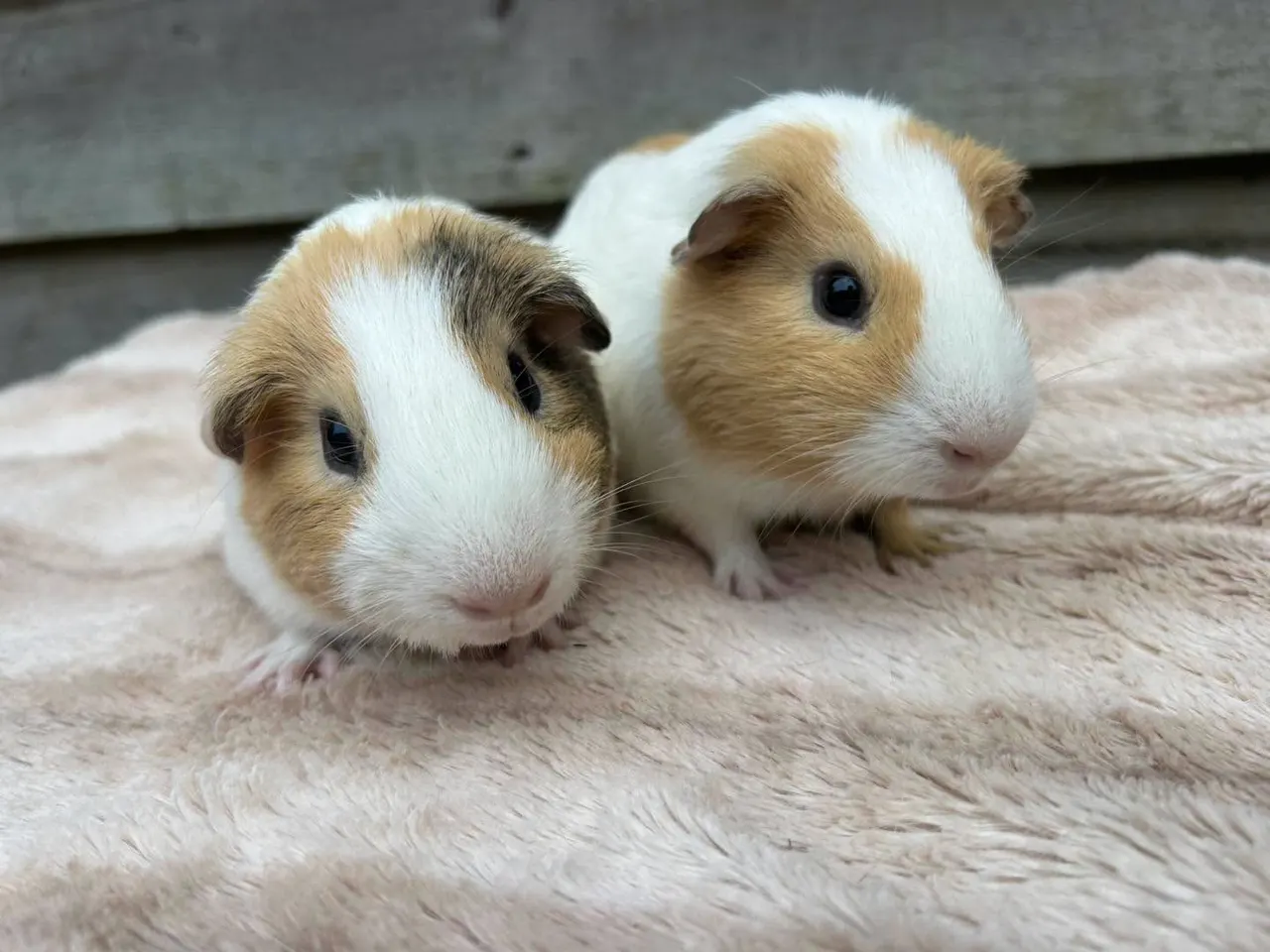
Keep the new guinea pig in a separate cage, ideally in a separate room, for about 2 to 3 weeks, and get a vet check. New pigs can carry mites, fungal skin infections or respiratory illness that don’t show right away.
During quarantine:
- Handle your existing pigs first and wash your hands between cages.
- Use separate bowls, bottles and hides.
- Watch for scratching, hair loss, sneezing or discharge.
A spare or older small cage is perfect for this. See is your guinea pig cage too small? for other uses of an old cage.
Which pairings work best?
- Sow + sow: usually easy.
- Desexed boar + sows: usually easy and a popular choice.
- Boar + boar: can work well, especially an adult with a young boar, but needs more space and patience.
- Boar + sow (not desexed): she’ll get pregnant. Don’t do this unless the boar is desexed and the wait your vet advises after desexing (usually about six weeks) has passed.
Many rescues offer “dates” so your pig can meet possible friends before you adopt.
Setting up neutral ground
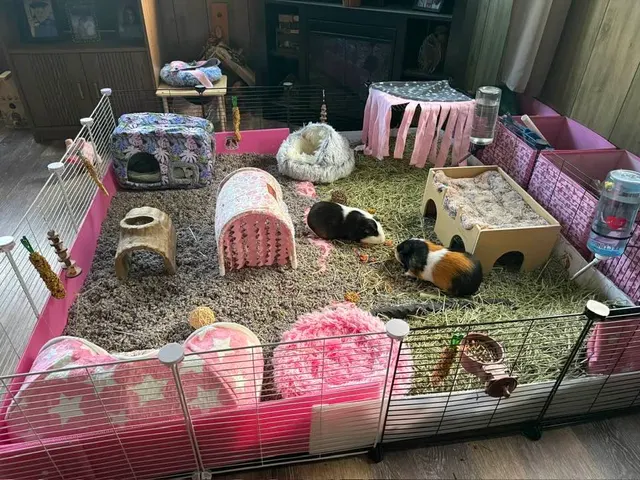
Neutral ground is a space neither pig has ever used or scent-marked. Their home cage isn’t neutral, even after cleaning. Good options:
- A playpen on the floor in a room they don’t usually go in
- A bath or shower recess lined with towels, for a small first meeting
- A cleared area on a waterproof sheet, fenced with grids
Set it up with:
- At least 1–1.5 m² of floor, so either pig can move away
- Fresh bedding, such as towels or fleece that neither pig has slept on
- Several piles of hay and plenty of veggies to distract them
- Hides and tunnels with two exits, so nobody gets cornered
- Water in two places
Our playpen guide covers panel counts and flooring.
Normal behaviour vs a real fight
Normal (let it happen)
- Rumbling and "rumble strutting" (swaying hips)
- Sniffing noses and bottoms
- Chasing and mounting
- Occasional teeth chattering
- Head raising contests
- Small tufts of fur pulled
Separate them
- Lunging with open mouths
- Biting that draws blood
- Pigs locked together, rolling
- Constant raised hackles and loud teeth chattering that keeps getting worse
- One pig cornered and unable to escape
To break up a fight, don’t use bare hands. Guinea pig bites are deep. Drop a towel over them or slide cardboard between them, then separate them. Check both for wounds and see a vet if you find any.
Moving into the shared cage
If they’ve been calm on neutral ground for a few hours, eating and resting near each other, it’s time to move them in together:
- Clean the cage completely. Wash all bedding and fleece, and wipe the base with a 50:50 white vinegar solution to remove old scent. See how to clean a guinea pig cage.
- Rearrange everything. New positions for hides, hay and water make it feel like new territory.
- Double up. One hide per pig plus one, two water sources and two hay spots, spread apart.
- Make it bigger if needed. A trio needs about 1.2 m² and four pigs about 1.5 m². Boars do better with more. Our size calculator gives the right size for your group.
- Put both pigs in at the same time, and watch for the first hour.
Dominance behaviour may flare up again in the cage for a few days. That’s normal.
Using a cage divider
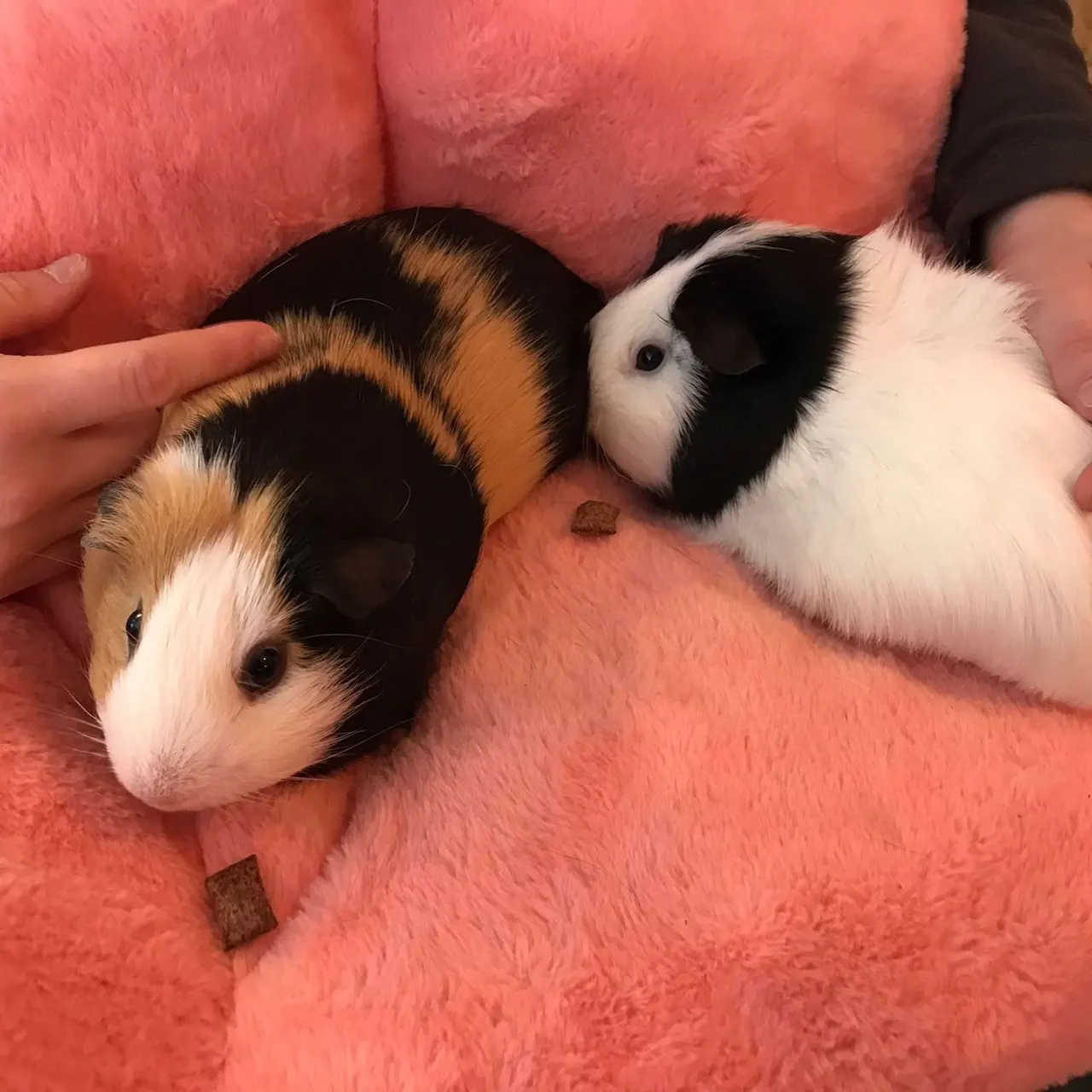
If two pigs can’t live together but you want them to have company, a split cage works well. Divide a C&C cage down the middle with a grid panel, so they can see, smell and talk through the bars but can’t fight. Each side still needs enough floor for its occupants. See C&C cages for layouts.
A divider is also useful as a halfway step for nervous boars: a few days side by side before trying neutral ground again.
When it doesn’t work
Not every pair will bond. If you get repeated real fights, keep them in side-by-side cages and talk to a rescue about finding a better-matched friend. Most guinea pigs will bond with someone, just not always the first pig you try.
Frequently asked questions
How do I introduce two guinea pigs?
expand_more
Quarantine the new pig for about two to three weeks first. Then introduce them on neutral ground neither pig has used before, such as a playpen on the floor with fresh bedding, hay, veggies and two-exit hides. Watch closely for an hour or more. If they settle, move them together into a fully cleaned and rearranged cage.
How long does it take guinea pigs to bond?
expand_more
The first meeting usually shows within an hour whether they'll get along. Sorting out who is in charge can take a few days to two weeks, with some chasing, rumbling and mounting along the way. Bonds between boars can take longer and need more space.
What is normal behaviour when introducing guinea pigs?
expand_more
Rumbling, sniffing, chasing, mounting, some teeth chattering, head raising and a bit of fur pulling are all normal dominance behaviour. They're sorting out who's boss. Real fighting means lunging, biting that draws blood, or pigs locked together rolling around, and you should separate them straight away.
How do I separate fighting guinea pigs safely?
expand_more
Don't use bare hands. Drop a towel over them or slide a piece of cardboard or a book between them, then separate them. Check both for bite wounds, and see a vet if you find any. Keep them apart in side-by-side cages and try again later, or consider a different companion.
Do I need a bigger cage when adding a guinea pig?
expand_more
Usually yes. A trio needs about 1.2 m² of floor and four pigs need about 1.5 m². Boars in particular get along better with more space. Add the extra space before the introduction, not after.
Why should I quarantine a new guinea pig?
expand_more
New guinea pigs can carry mites, fungal skin infections or respiratory illnesses that don't show straight away. Keeping them in a separate cage, ideally in a separate room, for about two to three weeks, and getting a vet check, protects your existing pigs.
Want a properly sized cage without the DIY?
We're looking at bringing properly sized cages and C&C kits to Australia. Join the waitlist and tell us what you'd want.
This guide is general information to help you compare housing options. It isn't veterinary advice. If your guinea pig seems unwell, contact a vet experienced with exotic pets.